In which The Gay Recluse says fuck yall.
Do you read The Atlantic? If so, be sure to check out this month’s ish, which has “Gay Sex” on the cover for a pull quote that says “Gay people, too, deserve to be wanted sexually,” as if that could ever be enlightening in any context, and then — coup de grace — includes this lovely exchange from Jeffrey Goldberg on the back page “advice column.”
Is life after college really as monotonous and depressing as it looks?
Ben, Manhattan, Kan.
Dear Ben,
No. It’s worse! Just kidding. It’s actually a joy. Except for the prostate exams.
Ha ha — get it? — prostate exams are where the doctor (often a male) puts his finger up your butt, and what could possibly be “worse than”/funnier having something up your butt if you’re another guy!? Omg, that’s s0000 funny! It’s like — wait for it!!!! — when two men “kiss” or “suck each other’s cocks!!!” OMG LMFAO!
We love The Atlantic so much, because they’ve been on the “cutting-edge” of enlightened cultural analysis and “hard-hitting” investigative journalism for at least 1000 years (i.e., the dark ages). We’ll be s0000 sad if they go under in the downturn.

Filed under: Conspiracy, Drivel, Gay, Sickness, Stereotypes | 9 Comments
Tags: Dark Ages, Homophobia, Jeffrey Goldberg, Losers, Olds, The Atlantic
On a Valentine’s Day Tower
In which The Gay Recluse remembers subtle forms of fourth-grade terror.
It’s not hard to remember a phase we went through in elementary school, specifically fourth and fifth grade (and possibly sixth, although even now it pains us to think about this) when each Valentine’s Day, we took it upon ourselves to make increasingly elaborate boxes for the obligatory exchange of cards that occurred each year. My memory of this exchange process is that it was quite rigidly democratic (in the way the 1970s could sometimes be, and to their credit); if there were twenty-three kids in your class, you were obligated to present each with a card, regardless of gender or — more important — how ostracized a particular student was, in the case of _______ or _______ or _______ (one of whom, incidentally, kinda freaked us out by recently “friending” us on FB, though s/he seems to be leading a relatively “normal” life, while another one of these outcasts died at a very young age; for years in elementary school we had shunned him, after the fateful day our mother somehow arranged with his mother for us to walk to kindergarten together, which we later feared — i.e., once he had been established as an untouchable — would obligate us to be ‘nice’ to him at a political cost that seemed altogether unreasonable).
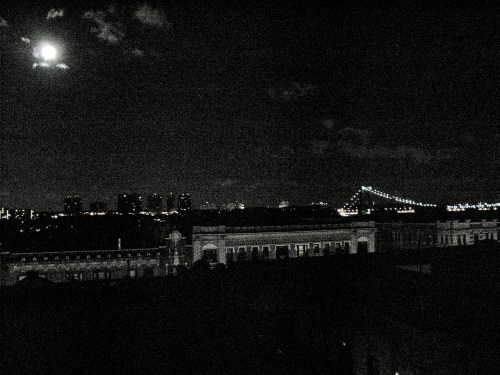
On Valentine’s Day, most students would simply bring in a shoe box with a few stickers or doilies attached to the outside, along with a few cut-out hearts of red construction paper. (Some of the girls made somewhat more elaborate designs.)
We dreaded Valentine’s Day, with its heterosexual implications and the horrible likelihood of receiving something “special” — given (and we don’t say this to brag) that we were intelligent, conventionally attractive and “good at sports” — from one or more of the suddenly cloying and detestable girls (who minutes earlier might have been a friend); it might have been something as simple as an extra sticker or a stylized signature or a tiny piece of candy crushed into the envelope, but whatever the case, the end result was to inform us that we were officially “liked” by the girl in question, which filled our soul with a gloomy sense of obligation and doom that would later — in the cauldron of our adult depression — become the diamond of pessimism through which we would look so longingly at death.
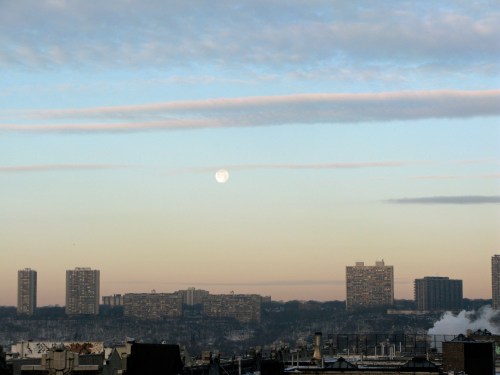
A more rebellious child might have expressed disdain for the entire procedure, or ignored it like some of the other boys who just “went through the motions” without giving this dumb exercise a second thought. We were not inclined to such rebellion, however, and somehow — though without being at all conscious of this at the time — decided that the more subversive (and clearly the gheyest) option was to make a spectacle of the entire event, which in our case meant constructing an elaborate Valentine’s Day “skyscraper,” a six foot tower of intricately wrapped (in alternating shades of red and silver) boxes, complete with distinct inner passages that would allow a card pushed through a slot at the top to fall down and arrive in one of two containers: “Hot date!” or “No luck!” (Or something to that effect.)
We worked on this for a week or more with our best friend ____ (who didn’t even go our school) helping out on the weekend; he was a Lego/Star Wars geek, so the idea of building the “death star” of Valentine’s Day boxes held some appeal.

We brought it into class in a huge garbage bag — “huge” not an exaggeration either, given that it was procured from our father’s industrial supply company — and can still remember the shame and excitement we felt as we hauled it into the classroom and assembled the pieces to an audience of children (each in front of his or her pathetic little shoebox), a few of whom were genuinely excited and perhaps awestruck while most of the others were nonplussed or most likely ambivalent. As with so much in our unformed years (i.e., the first 30 of them, at least), we could often “get away” with even the most outlandishly ghey gestures because so much of the rest of our life was so hopelessly str8. In effect, this was our one day to really show everyone what we wanted to do — i.e., make something that had nothing to do with any of them — and for this reason we loved it and desperately wanted to prove ourselves somehow capable, but we also hated ourselves for possessing these compulsions that were odd and somehow self-destructive, if not quite self-destructive enough (speaking psychologically).
The disassembled boxes remained in our parents’ attic for quite a few years, probably at least until we left home in tenth grade for boarding school, by which point we had become more athletic and a lot more “straight,” to the extent that we “acted normal” and limited our non-heterosexual outlandish gestures to bedtime fantasies and the accompanying clouds of unfathomable guilt that hovered about us at all times. But we remember going home and seeing the silhouette of the garbage bag in the narrow crawl space, knowing that it was an indelible part of our past and praying that it would not be the key to our our future, which of course is one reason we are now happier not believing in a Christian god (except when we are feeling really sick and feverish).
Filed under: Architecture, Dissonance, Drag Queens, Dream, Faith, Gay, Health, Longing, Memory, Pessimism, Ruins | 1 Comment
Tags: Elementary School, Ghey, Terror, Towers, Valentine's Day
In which The Gay Recluse reads Roberto Bolaño in stages.

In the fourth book of 2666, we are presented with something of an encyclopedia of the literally thousands of crimes (99 percent of them against women) that occur in Bolano’s fictional border city of Santa Teresa — modeled on the real Juarez — over a period of perhaps ten years, with an emphasis on those who were tortured, raped, mutilated (sometimes but not always in the same horrible way) and murdered, and whose bodies were most often found in the desert or an illegal dump or a remote ravine or ditch.

For the most part, Bolano describes these murders in the distant, clinical tone of a medical report — or sometime the more hard-boiled prose of a detective novel — and gives a short summary of the investigative follow-up, which invariably dissolves into the case being “shelved” for all of the usual reasons (apathy, no clues, lost evidence, no resources, horrible bureaucracy, possible cover-ups). But even as the mounting atrocity of the events described threatens to paralyze us, there is enough nuance and lyrical beauty to the prose, so that we are like a victim beaten down and increasingly horrified that these murders could continue for so long, with so little apparent repercussion to those committing them.
Which of course begs the question of who in fact is committing them, and here Bolano also has an amazing ability to draw us into the many different possibilities, while identifying none as dispositive. There are drug dealers and pimps and rich capitalists — the factory owners who hire these women — who may or may not be involved; there is a creepy “gringo” who “seems like” a serial killer and may or may not be orchestrating kidnappings/murders from a prison, even after he’s arrested; there are government officials who may or may not be in league with the drug dealers and pimps and capitalists; there are the police, whose baseline level of misogyny is so high as to be completely demoralizing as they laugh about all the different ways a woman can be raped; there are men in general in this society, who are brought up to view women as subhumans, and there are women who for whatever reason become enmeshed with these men; above all else, there is capitalism and money, which trumps even the most violent of crimes.
Bolano gives us all of this and more, so that by the end, we have no choice but to indict society, i.e., ourselves, because while Santa Teresa (and Mexico) may or may not be a special case, it’s clearly less (of a special case) than more. In essence, it’s hard to emerge from this book without a conviction that we are all guilty of these horrible acts.
It could probably be argued that Bolano’s reflection of reality in this regard is a little too realistic for purposes of a novel; is it really necessary to introduce us to so many characters and leave their stories unresolved? Ultimately it didn’t bother us, because underneath the brutality his work resonates with a compassion for the murdered women — or women in general — that leads us as readers to care about what he’s describing, even if we know — like in real life — so little of it will lead anywhere.
One question we continue to ask is exactly where Bolano stands with regard to the gays. Although Bolano (unlike 98 percent of U.S novelists, who obv prefer to ignore the issue completely) is to be commended for weaving — what? an awareness, a motif — a presence through the text — e.g., “[a]s you’re well aware,” says one character about Mexico, “this is a macho country full of faggots” — it cannot be doubted that 2666 is pervasively homophobic to the extent that virtually every character — from university professors to blue-collar cops to outspoken feminists — when offered even the slightest opportunity uses it to express nothing but disdain for limp-wristed faggots or fudge packers or whatever else. (There are also brutally violent prison scenes of men raping each other — and worse.) While we admire the truthful tone of this hateful treatment of faggots in Bolano’s work, so far we’ve felt none of the compassion he shows for women; it leaves us a little wistful, knowing that in this fictional world — like the real one — we are somehow even worse off than the hundreds of desperate whores left to rot in the desert and be picked apart by the vultures.
The 2666 Review Roundup:
The Part About the Critics
The Part About Amalfitano
The Part About Fate
The Part About Archimboldi
Filed under: Capitalism, Conspiracy, Decay, Disease, Dissonance, Gay, Landscape, Language, Literature, Sickness, Writers-Chilean | 1 Comment
Tags: 2666, Feminism, Juarez, Murder, Rape, Roberto Bolaño, Serial Killers, The Part About the Crimes, Torture
In which The Gay Recluse helps the United States in a time of crisis.
Today was a tough day on Capitol Hill, where the topic of hot gay statues was taken up and — as usual — soundly defeated. Fortunately, the issue is not entirely moot, and reader Tyler Green was kind enough to point us in the direction of something that until now had escaped our attention:
[This statue is called “Man Controlling Trade” and is by Michael Lantz] the brother of Walter Lantz of Woody Woodpecker fame, from outside the Federal Trade Commission HQ in DC.
Sounds like it might be worth a look?
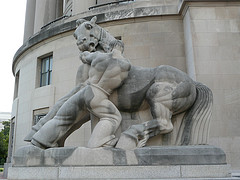
Whoas. That guy’s controlling something, and it may or may not be “trade.”
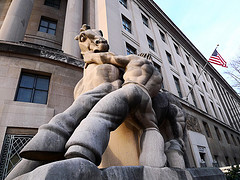
Hey, that’s one way to end your “Depression.”
Thanks for the tip, Tyler. Let’s hope the “stimulus plan” delivers everything we were promised, including not only more hot gay statues in the nation’s capital but in every town with a population greater than 100.
Photo credits: Andy961 on Flickr (first) and Eric Marc Crawford on Flickr (second).
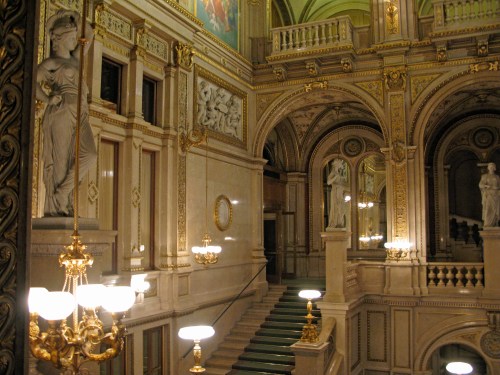
The Hot Gay Statue round-up:
- Rules and Guidelines
- Dan Savage Endorsement
- Washington Heights (New York City)
- Washington, DC
- The London Eye Clarifies an Important Issue
- Florence (Italy)
- The Park Avenue Amory (Upper East Side/NYC)
- Murray Hill (New York City)
- Madrid (Spain)
- Los Angeles
- Philadelphia
- The London Eye: “In Your Face”
- The J-Man Inspires
- George Washington
- Georgia (Republic of)
- New Orleans
- Columbus Circle (New York City)
- Two Davids (Florence)
- Franco Harris Statue (Pittsburgh)
- London Firefighters and Other Heroes
- Columbus Circle Mall (New York City)
- Miami
- Paris
- Grand Central Station (New York City)
- Albany, New York
- Chicago
- Albany, New York (Hot Gay Statute)
- The Metropolitan Museum (New York City)
- University of Southern California (Los Angeles)
- More Getty Villa (Los Angeles)
- Union Station Centurions (Washington, DC)
- Hot Gay Ladies in Washington Heights (New York City)
- Honolulu
- Stockholm
- Florence (Italy) II
- Vienna
- San Francisco
Filed under: Architecture, Capitalism, Competitions, Gay, Government, Hot Gay Statues, Infrastructure, Politicians | Leave a Comment
Tags: Capitol Hill, D.C., Depressions, Federal Trade Commission, Man Controlling Trade, Michael Lantz, Stimulus Plans, Washington
In which The Chaos Detective goes to Munich.
Click through for “hi-quality” on YouTube or watch on Facebook.
Stay tuned for the fifth and final installment of “City of Dreams.”
Filed under: Architecture, Capitalism, Conspiracy, Film, Government, History, Landscape, Search, Sickness, Technology, The Chaos Detective, Travel | 1 Comment
Tags: City of Dreams, Hofgarten, Kempinski Hotel, Ludwig II, Munich
In which The Gay Recluse wonders why David Brooks is still in office.
Ohai! We thought we’d play a lil game in which we pull quotes from three pieces about the exurbs, two written in 2k4 by David Brooks in The Times — “Take a Ride to Exurbia” on the opinion page and “Our Sprawling, Supersize Utopia” in the magazine — and the other — “In Florida, Despair and Foreclosure” — published today (i.e., 2k9) in The Times. Try to guess when the quotes were written, and by whom — click through for answers! (Note: there’s one trick question — guess which one it is.)

I came out with a book on the booming exurbs – places like the I-4 corridor in central Florida and Henderson, Nev. These are the places where George Bush racked up the amazing vote totals that allowed him to retain the presidency.

Early last year, garage sales and estate auctions became more common in Lehigh Acres as families sold what they could to survive.

I’m so impressed by Karl Rove. As a group of Times reporters demonstrated in Sunday’s paper, the Republicans achieved huge turnout gains in exurbs like the ones in central Florida.
Home prices have collapsed, and many houses built during the housing bubble have been foreclosed or abandoned.
[C]riticisms don’t get suburbia right. They don’t get America right. The criticisms tend to come enshrouded in predictions of decline or cultural catastrophe. Yet somehow imperial decline never comes, and the social catastrophe never materializes.
Hunger has become a growing problem.
[P]eople move to exurbs because they want some order in their lives. They leave places with arduous commutes, backbreaking mortgages, broken families and stressed social structures and they head for towns with ample living space, intact families, child-friendly public culture and intensely enforced social equality.
[I]t went from housing market boomtown to its current landscape of abandoned developments and struggling businesses. No one seemed interested in buying whole houses, and foreclosures soon gave way to empty homes that became magnets for crime.
[T]here is this spot you can get to where all tensions will melt, all time pressures will be relieved and happiness can be realized.
Signs of trouble were ignored. “Sometimes houses would sell three or four times in a few months, and no one would move in.”
Get out into the sprawl, into that other conversation. Take your time. It’s a new world out there.
Panic is a powerful headwind.

Poets, pundits, philosophers and politicians, take note! This is not the story of nations or other one-hit wonders, nor is it the story of religion, for which so many millions have died in futile anger and delusion. It is certainly not the history of capital, although this too has been a scourge; no, friends, these are distractions from the real story, which is the slow but relentless rise of the city. Incomprehensible beauty and despair! Inexplicable dissonance and distortion! Inalterable repudiation of all political philosophers and religious zealots who would explain our existence without acknowledging the seething allure of the trains and tunnels, the buildings and bridges of this endlessly mutating labyrinth into which we must cast ourselves to find civilized life! How sorry and sad — which is to say, irrelevant — are the candidates — which is to say, all of them — who fail to discuss the implications of this truth; how tiresome the critics and commentators who obscure it with egocentric jargon about freedom and community. Is it not immediately obvious who among them has or has not walked the streets, and not only in the tedious safety of the day but in the more barren and remote hours of the night, when we are possessed by creaking gates, distant gunshots and — most of all — the pounding, subterranean space we learn to call our heart?
[All pix except the GWB by Chip Litherland for The New York Times]
Filed under: Addiction, Capitalism, Drivel, History, Infrastructure, Knockbusters, Landscape, Quotes, Stereotypes, The Times | 3 Comments
Tags: Cities, David Brooks, Exurbs, Shallow Optimism
On the Search for Spring
In which The Gay Recluse dreams about the garden.
When the February blues hit — and considering this winter, how could they not? — we like to immerse ourselves into dreams of spring, which entails many hours in the seed and plant catalogs. Though our garden is dominated by perennials, bushes and trees designed to draw forth the essence if not the reality (given our limitations) of an alpine garden, we like to reserve the pots for annuals — sorry, purists! — because even though “friends don’t let friends buy annuals,” we find that they really do help add color when our garden tends to need it the most, i.e., through the drab period of late July and August. Last year we tried growing our annuals from seed with mixed results; some never got bigger than an inch or so, while others did eventually grow to the monstrous proportions we had anticipated. This year, we’re trying again, with an eye toward picking varieties that will all maybe actually thrive in the extremes of stultifying heat and humidity we seem to inevitably face each summer. Herewith our choices this year, with accompanying descriptions from the catalog:

Sunflower Sunny Smile (Helianthus annuus)
The big Sunflower you can grow in a small pot!

Flowering Tobacco (Nicotiana x sanderae)
If your summers are hot and humid, Flowering Tobacco is the annual you MUST grow.

Zinnia Profusion (Zinnia)
Winner of Gold Medals Galore, this is the Best Zinnia EVER!

Salvia Park’s Whopper Lighthouse (Salvia splendens)
So big, bright, and bold it could only be a Whopper, this annual Salvia takes the world by storm from the moment you sow the seed.
Do you know about any “must-have” annuals for 2k9? (Keep in mind we live in the swamplands of New York City.) Let us know, or send links/pix!
Filed under: Dream, Faith, Longing, New York City, The Spring Garden, The Summer Garden, Weather | Leave a Comment
Tags: Annuals, Flowering Tobacco, Perennials, Salvia, Sunfower, Zinnia
On the Search for Relevance
In which The Gay Recluse questions his brand.

When we started blogging, we didn’t really know anything about the internet, much less “bloggable memes.” Until then, like most people in our demographic, we had spent our time on nytimes.com and our “Yahoo home page.” But we quickly discovered internet traffic, and modified the blog to include many “gimmicks” to attract as many page views as possible. We wrote about the need for gentrification in the Heights, we made fun of str8s in the Style Section of The Times and most notably, we posted pix of “hot gay statues” from around the universe.

But this year our interest in gimmicks has faded. We like to tell everyone that our blog is “growing up,” but this raises a difficult question: can you still be “a relevant blog” if your traffic is growing at <1 percent/year (or if your “authority” on Technorati is <500)?

Also: do you think it’s a mistake to be a “gay blog” instead of a “literary blog (written by a geighehgihay)?” Technorati reports that “to be gay walls off close to 90 percent of internet users, and 98.7 percent of ‘serious literary readers.'” Given this, do you think we should “downplay” the gay side of the blog — maybe rebrand as “The Guy Recluse”? — to make our blog more “palatable” or should we go “all out” and post pictures of David Beckham and other “str8dbags” like you see on the “leading” gay blogs?

Or is it too late, so that we’ll always exist on the fringes of the blogosphere (and never make enough $ from Google Ads to “quit our job”)?
Filed under: Addiction, Dissonance, Gay, Gentrification, Infrastructure, Longing, Search, Traffic | 4 Comments
Tags: Bloggable Memes, David Beckham, Google Ads, Identity Crisis, The Guy Recluse
On Death Culture at Sea: 1968
In which The Gay Recluse rocks out a lil?
Listen on our Tumblr or download from the Death Culture at Sea web site.

Can’t believe the things I have to say before I make it through the week
I’m feeling sicker than philosophy
I read a million useless words when I was younger then
Today I’m feeling more than slightly sleep-deprived
Abruptly I was taken back to scenes I wish I could forget
Crawling through a darkened space with hands I did not recognize
Pulling me beneath the waves
We always try to swim outside but sometimes these are heavy stones
I would not be the first to take the slide
Restaurants are open for a million-dollar meal
Sometimes it hurts to think of everything I steal
Filed under: Bad Rock, Conspiracy, Death Culture at Sea, Good Rock, Nostalgia, Pessimism | Leave a Comment
Tags: 1968, Death Culture at Sea, Lofi
In which The Gay Recluse watches teevee.

There are times when we cannot believe how long we’ve been alive, and concurrently, how long — assuming a regular life span — we still have to go. Though admittedly it’s a thought that most often arrives during an afternoon meeting at work, it also crosses our mind at random moments in the middle of winter, when everything seems frozen and permanent, or during an unpleasant commute, or waiting in the dentist’s office, or really any number of things we are required to do that offer nothing but the tedious certainty that life is really nothing more than a pit of quicksand in which we are slowly sinking. (Oddly this never happens when watching teevee — no matter how bad the show — which is both its gift and its curse.)

It goes without saying that as we get older and accept more “responsibility,” we worry more than when we were younger. Money, our health, the health of our children the cats, the fear of dying in Washington Heights, the fear of not dying in Washington Heights; all of this and more relentlessly plagues our thoughts with an intensity we could not have imagined even ten years ago, which makes our future seem like a mountain that gets steeper and icier with every step forward, but which offers no possibility of retreat.
During these moments of existential despair, we look back at the course of our life and it seems that every time we reached a fork in the road, we went in the wrong direction. Why did we do x, we wonder, when doing y — an option that would have been simpler — would have spared us so much hardship? Why — instead of using our natural talents — were we so intent on squandering every advantage? Why did we search out those who wished us nothing but harm and misery? (Why do we blog/Twitter/Tumblr/Facebook?) We think of others — lottery winners, acclaimed artists and writers, teevee stars, anyone who owns a 2br/2bth apt south of 96th Street on the west side — with seething jealousy, given what feels like a certainty that their lives are so much more pleasant and joyful than our own. How did it happen that so many people are younger and smarter (and richer) than us, when we used to be so good at math and scored in the 99th percentile on ever standardized test we ever took? Why did we spend 10 years in a band, when 1-2 would have more than sufficed?
But this passes as we acknowledge an (admittedly delicious and decadent) inability to really do anything about anything. It’s like when we were in law school; the first semester we couldn’t believe that our entire grade would be based on one three-hour test (no quizzes, no mid-terms, nada), but by the second semester, we could not imagine ever going back to a system in which we would be tested more than once a semester.

In this way only does life offer a common denominator: all memories (like dreams and perhaps even regrets) are created equal, and all paths lead to the same oblivion.
Filed under: Conspiracy, Decay, Dissonance, Dream, Drivel, Landscape, Ruins, Search, Sickness, The Winter Garden, Washington Heights, Weather | 6 Comments
Tags: Cats, Depression, Fears, February, Layoff, Meetings, Recession, Snow, Tedium, Teevee, Work
On The Part About Fate (2666)
In which The Gay Recluse reads Roberto Bolaño in stages.
In the third book of Roberto Bolaño’s epic 2666, we leave behind the maybe-psychotic descent into madness of Professor Amalfitano for a broader type of madness known as the fringes of modern/capitalistic civilization. Bolaño does this by way of a Harlem-based reporter who goes by the name — for reasons never fully explained — of Oscar Fate. His mother has just died, and we follow him on an assignment that takes him first to Detroit — to interview a former Black Panther — and then to Santa Teresa, the fictional Mexican border city where hundreds of women have turned up murdered in the desert over the past decade or so.

Initially sent to cover a boxing match, Fate becomes at first intrigued and then enmeshed in the local “culture,” a bizarre and thuggish (and macho and obvs homophobic) netherworld. Bolaño’s prose takes an appropriate turn toward the noir; if Fate is not a detective per se, he uncovers tantalizing facts in his adventures in Santa Teresa that may or may not shed light on the outstanding questions of who the mysterious author from the first book is, whether he too is in this Mexican city, and what this may or may not have to do with the murders. Whatever the case may be, there are few people Fate meets who don’t seem to be guilty of something.
So it happens that we become the true detectives; we read with a cool detachment that perfectly captures the sense of unreality we associate with trips to a foreign country, most obviously, but also in our daily lives. Bolaño captures that stunned moment when we ask “wtf are we doing here?” before we spend a few more seconds looking for clues in the deluge of senseless details with which we are all confronted. That there is never a clear answer to this question does not always prevent us from asking; then we stumble forward, perhaps with some recognition (or hope or fear) that this in fact is our Fate.
The 2666 Review Roundup:
The Part About the Critics
The Part About Amalfitano
The Part About the Crimes
The Part About Archimboldi
Filed under: Capitalism, Conspiracy, Infrastructure, Literature, Search, Sickness, Writers-Chilean | 1 Comment
Tags: 2666, Boxing, Fate, Mexico, Murder, Noir, Roberto Bolaño
In which The Gay Recluse reads Roberto Bolaño in stages.
As the title indicates, the second book of Roberto Bolaño’s 2666 is devoted to Amalfitano, a professor of philosophy (or maybe sometimes literature) at the university in the Mexican town where — in the previous book — the three pretentious European academics/literary critics gathered to look for an elusive German writer who is the object of their scholarly pursuits. In this book, far more than the first, Bolaño offers us oblique symbols, odd gestures — a book of geometry left to hang on a clothesline plays a major role — arcane references to obscure texts and authors (although not all are obscure, though some may be made up?), and (dreaded trope of post-modern literature; although he may be mocking it?), mathematical equations. This is a book that would be perfect fodder for the detestable literary critics, as if Bolaño wants to please and mock them at the same time.
Not coincidentally, all of this is put to the service in describing what appears to be a descent into madness by Amalfitano, who by the end of the chapter is hearing voices in his head (among other things). In getting there, we learn a little bit about his childhood in Chile, and quite a bit more about his first wife (and the mother of his daughter), who ran away many years earlier after becoming obsessed with a Spanish poet who was also insane (and maybe gay, or at least enough to catch AIDS from a male lover and pass it along to the wife?) and living in an asylum.
Because this book — although short — is so abstract and dense, we were somewhat less enthralled than we were with the first one, and relieved when it came to an end. Not all fiction, of course, is meant to please — or be understood — and Bolaño seems more than aware as he tests our patience. But we never felt compelled to give up; there was too much unresolved mystery hanging on from the first book, and there was also at times a new and more intimate quality to the prose that made us suspect that in this character, we were probably getting as close as Bolaño would allow to himself, i.e., the writing at times seems to reflect not only the madness of the character, but of his creator. So we were carried through by deep currents of what felt like regret and anger and desperation; there was a bitterness to some of these words that made it hard to believe the author, when writing, didn’t know he was about to die.
The 2666 Review Roundup:
The Part About the Critics
The Part About Fate
The Part About the Crimes
The Part About Archimboldi
Filed under: Dream, Literature, Memory, Writers-Chilean | 4 Comments
Tags: 2666, Amalfitano, Chile, Geometry, Madness, Mexico, Roberto Bolaño
On the Wahi Knockbusters Report: Why Did the City Tear Down Our Only Luxury Condominium Development?
In which The Gay Recluse remembers 2k6.
In this weekend’s City Section of The Times, we learned that the city recently tore down the only luxury condominium development in Washington Heights, located on an undeveloped patch of land under the George Washington Bridge overpass. Nestled in the trees and rock formations, the site had promised a rare opportunity for prospective buyers to own “a slice of old-growth Manhattan,” while remaining close to the “world renowned” Columbia Presbyterian hospital complex. Residents of the new development were promised “easy access” to Wendy’s “gourmet” at 165th and Broadway and all of the other incredible cultural amenities of New York City’s “most vibrant” neighborhood. Construction had already begun, which makes the city’s actions all the more perplexing. We attended an open house a few months ago and took some shots of the units.
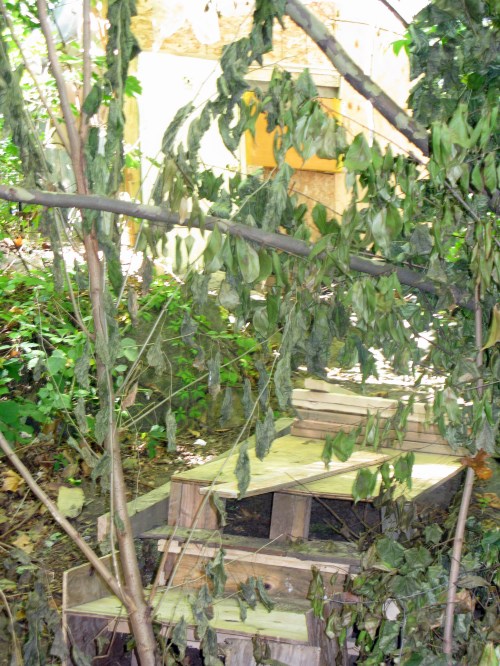
Lush forest shades a gently inclining approach* to the residential complex.
*ADA compliant
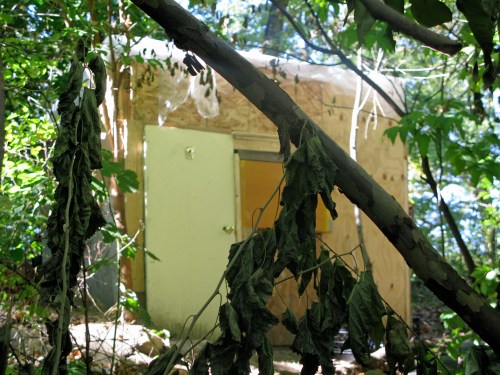
Constructed of sustainable-yield hardwoods and recycled stone, the cutting edge of eco-friendly living.

Hudson River views and free tennis courts only minutes away.
RIP, Wahi luxury condos///miss u, 2k6.
[HT Carla]
Filed under: Architecture, Capitalism, Conspiracy, Gentrification, Infrastructure, Knockbusters, Landscape, The Times, Washington Heights | 4 Comments
Tags: City Section, Columbia Medical, Hooverville, Luxury Condominiums, The George Washington Bridge
On DeathCulture@Sea: Anodyne
In which The Gay Recluse sings a song.
Here’s the latest from DeathCulture@Sea — aka the staff here, some papers towels, an acoustic guitar and a book (oh and chopsticks and a silver plate) — a song inspired by our recent remembrance of shoegazing past (even though this is more an attempt at lo-fi Spacemen 3 with our unavoidable Stipish inflections — maybe?). Anyway! You can listen on our Tumblr or download from the Death Culture site (click “music”) and cry tears of joy or pity as listen in your headphones and stare blankly at your fellow commuters/exercisers.
Here is the factory where you worked beside the cavemen
This is the hour when you find yourself awake
Find me a kitten who tugs at your resistance
Now is a decade when you reach “a certain age”
We in the city are crushed by this rebellion
Tell me the future of wifi exploration
Seven is a number left without a purpose
You and your death wish for dealers in casinos
Filed under: Bad Rock, Conspiracy, Death Culture at Sea, Dream, Good Rock | 1 Comment
Tags: DeathCulture@Sea, Lofi, Shoegazing, Singing, Songs
In which The Gay Recluse reads Roberto Bolaño in stages.
In our experience, one test of a great novel is whether you find yourself altered as you ingest the text, so that your mental dialog seems to be narrated by the writer in question. This is one of the strengths of the form, to the extent that (at least for us) it can literally change the way you look at the world on the most fundamental of levels; suddenly you are not sitting in a meeting counting the seconds as some hated windbag drones on about nothing, but instead you are able to parse your thoughts, to recognize that untold currents cross through us at any particular instant, and that underneath your superficial disdain for this man (and let’s assume it’s a man), you detect a fear that you are really looking at yourself — or more accurately, a vision of our future — or that this man actually appeared to you in a dream the previous night, except the dream was about your past and the man was your father; then it might occur to you that the afternoon light of the winter sun slicing across the conference room represents an opportunity for something — perhaps forgiveness or redemption — so that an hour later (after the meeting has concluded) you look at the black sky with a mix of pain and longing and remorse, although none of this prevents you from turning off your computer and leaving the office as quickly as possible, for it has also occurred to you that only the city streets leave you truly anesthetized and so you rush out the revolving door of your office building and are swept away in the the river of pedestrians for many blocks before you realize that you are in fact heading in the wrong direction from where you need to be.
So far — and we have finished the first of five “books” — 2666 is this kind of great novel. There is a plot, which to this point centers around four literary professors/critics (all based in Europe) in search of an obscure German novelist who has never really been seen and may or may not be in a city in Mexico where hundreds of girls have been murdered. While this is compelling enough to keep us turning the pages during a few too many dream sequences and one self-indulgent sentence that lasted perhaps four pages, Bolano’s true gift is to render (in beautiful, poetic prose that feels almost beyond the capacity of the English language and makes us wish we were writing in French or Spanish or even German) the ambiguity of modern life, i.e., the competing urges and emotions that inhabit the smallest gestures (say, a two-minute phone call to someone you speak to every day) to the largest (e.g., brutally beating someone on the street and leaving them to die.)
Actually, not all of Bolano’s prose is so lush; much of it — particularly as he describes the characters’ actions, often in short punchy sentences — conveys a sense of (modern) detachment that is mirrored by the charaters’ own detachment (at least in this section). Two of the professors (not coincidentally the two able-bodied men) are particularly arrogant, and Bolano spends a fair amount of time slyly skewering the (often unconsciously and hilariously) pretentious European intellectuals he has created for us. But none of this can disguise an obvious love of beauty Bolano brings to the text, and if anything, the detachment makes us all the more vulnerable to the florid romanticism with which he sweeps us away at the end of so many of his sections. When we finished this book, we were almost reluctant to begin the next, knowing that soon enough it would no longer be undiscovered, and our anticipation would never be so great.
“And this statue came out of the sea and rose above the beach and it was horrific and at the same time very beautiful.”
The 2666 Review Roundup:
The Part About Amalfitano
The Part About Fate
The Part About the Crimes
The Part About Archimboldi
Filed under: Dream, Faith, Literature, Search | 5 Comments
Tags: 2666, Novels, Roberto Bolaño, The Part About the Critics, Windbags
On Nowhere
In which The Gay Recluse remembers Ride.
The opening chords of “Vapour Trail” are high and open, yet filled with same (phase-shifted) melancholy we associate with ringing church bells. To hear this the other day, as we plodded through our thirty minutes on the elliptical at the gym, was to be swept away with a sense of forgotten potential — i.e., it was not hard to remember listening to the song fifteen years earlier — and an accompanying sadness at the inevitable failure to arrive at any destination we might have anticipated, or at least with any degree of pleasure.

This is less a statement of unhappiness about our current station in life than a reflection of the unrealistic nature of our ideals at the time, and a more molten sense of regret that — at least in our experience — is so often wrapped inside the hard truth as it dissolves on our tongue. At the time — 1992 — we were just about to start law school in New York City; perversely, we had applied to schools based only on our desire to play guitar — “alternative” was the phrase du jour — which we can now admit was mostly just a superficial desire, underneath of which resided a more hidden longing, although one barely acknowledged, and in any event always accompanied by waves of terror in complete disproportion (or perhaps not, in the context of AIDS) to the glimpses of our true nature we very rarely allowed ourself.
Most of our classmates in law school, we were sad and amazed to discover, were not at all interested in voraciously devouring the music of the early nineties to compensate for — or perhaps sublimate — their sexual identities. As a result we viewed most of them with a juvenile disdain, as if we were really biding our time in this prison before going on to a better — if completely (beyond vague and preposterous notions of rock stardom) undefined — future; like Morrissey, we wanted to be famous (although in an alternative sense, the way Pavement was famous then), but unlike Morrissey (or even Pavement), we had little courage or vision. One memory of law school: after a seminar, we overheard some girl say to her friend: “I just got a kitten and named her Tsunami,” to which we interjected: “Oh, like the band?” as if some obscure group (whose music, moreover, we didn’t really like) would be of utmost importance to everyone in the world. The irony of our situation was that while we successfully positioned ourself into an environment in which we were “cool” — at least in our mind — simply by virtue of the fact that we had no interest in working at a firm or a public-interest group, at the same time going to law school made us eminently less cool in those circles in which we most desperately wanted to succeed (in this regard, feel free to envision a bullseye with Matador Records at the center.)
When we finally started a band, during our second year in law school, despite our pathetic attempts to basically ape Galaxie 500 with perhaps a dose of Ride and My Bloody Valentine thrown in (speaking theoretically), we created a little “buzz” in the East Village — and among certain assistant A&R reps from major labels who incredibly enough oozed over and slipped us their business cards after the set, just like we were in movie — primarily from the fact that our show was packed with friends (from law school, because it was the beginning of a semester and there was nothing better to do) and we made Brownies an unprecedented amount of money for a Monday night. Soon we were hearing from “crazy Karen,” the booking agent for the club, who naturally liked to have a money-making act open up for someone “huge” like the Strapping Field Hands or the Magnetic Fields or the Grifters or Fuzzy. At one of our these shows, “Gerard from Matador” was spotted in the audience, but predictably enough — because we didn’t have much to say — he left disappointed (or so we heard) and from then on he never acknowledged our existence, even in Boston when we played with his band Envelope upstairs at the Middle East.
The first time we heard Nowhere, the 1990 debut LP by Ride, we were “kinda shocked” by the opening bassline, specifically with regard to how plainly derived it was from “Taxman,” which of course is the opening song on Revolver (arguably the best album by the “Liverpool Band,” as we preferrred to call them.) Was this bass line really “necessary”? Similarly bizarre to our ears was the song “Decay” — it arrives about halfway through the record — which is equally “inspired” by the Rolling Stones’ “Paint It Black.” Needless to say, we quickly overcame our aversion to the record and played it obsessively for perhaps a year or more, or at least until Ride released their next record and we became disillusioned with their failure to maintain our standards. These days, we would say that along with Loveless, Nowhere is the most successful example of the sort of late 1980s post-gothic, psychedelic wall-of-noise, unapologetically sweet (vocally), proto-electronic-ish (a la Manchester beat) music typically referred to (derisively or not) as “shoegazer rock.” It’s a record that sounds as if the sixties were funneled through a jet engine and transformed into pessimistic odes to the ephmeral nature of life and sometimes death (obviously the lyrics would make ridiculous, terrible poetry, but are beautiful in the context of the songs); the actual recording of the record is sublime, too; as our friend Mike put it the other day, the drums sound like tree trunks hitting against vast lakes of still water.
“First you look so strong,
Then you fade away.
The sun will blind my eyes,
I love you anyway.
First you form a smile,
I watch you for a while.
You are a vapour trail,
In a deep blue sky.”
The first time we played at CBGBs was a Saturday night in 1994; Jawbox was on the bill (and were responsible for getting us the show, since our bass player knew their guitarist from college), as was Sunny Day Real Estate. The catch — as we learned after accepting the offer — was that we would be the “warm-down” band, a kind of terrible but exhilarating feature that like certain forms of torture should probably henceforth be relegated to museums and encyclopedias. (CBs sometimes used to have multiple warm-down bands, as we discovered one strange Wednesday night when we stayed there until three am with Beth — like the Kiss song — whose friend’s boyfriend’s band was appearing in one of these slots; even at the time we knew there was something awful and surreal about sitting in CBs at that strange hour, peeling the labels off our beers and fixating on the decaying fabric of the random couches and armchairs in our vicinity, perhaps realizing but not quite acknowledging a fear that this was a metaphor for our own future.) Nevertheless, for our show, even though tons of people streamed out after Jawbox (the headliner), enough remained to make the event a true pleasure — something nobody could ever take away from us — particularly in comparison to the thousands of empty venues — including malls, back porches and “art galleries” — we subsequently played during our years “on tour.”
There was a girl at this show — she was from Connecticut or maybe Westchester — who we will always remember: she was tall and gangly, well over six-feet with wide hips, a shock of red hair and large, expressive eyes, which in the glow of the nightclub appeared like mirrors. Though she professed to like our band (she even bought a 7-inch, if memory serves), her true love was Ride. She published a zine (which had more than a few issues) exclusively about the band and her undying love for them, and she encouraged us to sign a petition she planned to send to the band’s U.S. label with a thought to encourage — or “force” — them to fund a Ride tour of the States. (By this point it was 1995 and the band’s third LP was considered an artistic and commercial failure by all concerned, except for this girl we met; sadly her name now escapes us and we threw out her zine when we left Brooklyn.) We expressed our disappointment at having not seen the band a few years earlier, when they had canceled an American tour after the drummer broke his leg playing rugby (maybe?).
“Tremble with a sigh,
Glitter in your eye.
You seem to come and go,
I never seem to know.
And all my time,
is yours as much as mine.
We never have enough,
Time to show our love.”
We thought of this girl from our past the other day as “Vapour Trail” ended and the chiming guitars slowly gave way to the orchestrated strings. We wondered where she is now (although we don’t really want to know), and if she still loves Ride more than any other band. (Did she maybe play “Vapour Trail” at her wedding? (Was it a lesbian wedding?) Will she one day pass on her love for this band to her grandchildren? (Will they accept it?)) That we think of her fondly and with a certain admiration gives us some comfort, if not exactly hope, knowing that even the smallest of waves can roll for thousands of miles across a flat sea.
(Listen to “Vapour Trail” on our Tumblr.)
Filed under: Bad Rock, Capitalism, Conspiracy, Decay, Good Rock, Longing, Memory, New York City, Obsession, Resignation | 3 Comments
Tags: Beth, CBGBs, Kiss, My Bloody Valentine, Nowhere, Ride, Shoegazer Rock, Vapour Trail
In which The Gay Recluse holds a contest. Sort of.
Today we heard from Mike, who’s taking a break from Rottin’ in Denmark to travel our great country in search of hot gay statues (among other things). He writes:
I was shocked when I found this in SF this week. Does it count? It’s about as hot and gay as America gets. . .
As always, we’re intrigued. Let’s check these shots out to see if Mike has finally put San Francisco on the HGS map.

Hey, what’s that hot guy doing in the park?

Crank it brosephine.

Hello! (NSFW!?)
So yeah, we don’t know what everyone else thinks, but we’d say this guy more than “counts.” Thanks for putting San Francisco on the map, Mike — the city (and the country) should all be grateful.
The Hot Gay Statue round-up:
- Rules and Guidelines
- Dan Savage Endorsement
- Washington Heights (New York City)
- Washington, DC
- The London Eye Clarifies an Important Issue
- Florence (Italy)
- The Park Avenue Amory (Upper East Side/NYC)
- Murray Hill (New York City)
- Madrid (Spain)
- Los Angeles
- Philadelphia
- The London Eye: “In Your Face”
- The J-Man Inspires
- George Washington
- Georgia (Republic of)
- New Orleans
- Columbus Circle (New York City)
- Two Davids (Florence)
- Franco Harris Statue (Pittsburgh)
- London Firefighters and Other Heroes
- Columbus Circle Mall (New York City)
- Miami
- Paris
- Grand Central Station (New York City)
- Albany, New York
- Chicago
- Albany, New York (Hot Gay Statute)
- The Metropolitan Museum (New York City)
- University of Southern California (Los Angeles)
- More Getty Villa (Los Angeles)
- Union Station Centurions (Washington, DC)
- Hot Gay Ladies in Washington Heights (New York City)
- Honolulu
- Stockholm
- Florence (Italy) II
- Vienna
Filed under: Architecture, Athletes, Competitions, Gay, Hot Gay Statues, Search, Traffic, Travel | 1 Comment
Tags: Brosephine, NSFW, San Francisco
In which The Gay Recluse ponders Junot Diaz and the purpose of novels.

Today we finished The Brief and Wondrous Life of Oscar Wao by Junot Diaz. For obv reasons — namely, the book won every award last year — our expectations were high, and but for the most part were met. In case we’re only the second-to-last person to read TBWLoOW, we’ll mention that it features an intense and zany “mash-up” (or pomo) style of high/low-culture prose that reverberates with everything from street slang (in English and Spanish) to eighties goth to Middle Earth and Dune, all of which Diaz employs with great dexterity to describe three generations of a family as they first suffer under the exceedingly heinous dictator Rafael Trujillo in the Dominican Republic and then — or at least those who survive — flee to New Jersey and in some cases, Washington Heights (i.e., home of yours truly).
The book is necessarily long and the scope epic, filled with big and even operatic gestures of love and violence and redemption. As a rule, the women are hot and strong-willed and beautiful, i.e., they have ginormous tits and J-Lo asses and like to fuck (a lot), and the men — except for poor Oscar, who is too nerdy to get any action (although he continually longs for it) — are only too willing to oblige (and then some). This lust for life — both literal and not — trumps any other concern in the narrative (political, historical, self-preservation, etc.) and gives the book a sweetness that ultimately saved it for us a few times when we were like: Ok bro, we get it: you’re clearly the master of this hyper-nerd/street-tuff melange, but can you just stfu and relax/reflect for a few pages?!
Part of our discomfort (though it never rose above the admittedly mild) stemmed from a slight dissonance we felt between the Dominican “culture” we — as long-term Wahi residents — know and the x-l/comic-book version that Diaz offers up with such gusto. Although Diaz certainly sheds a lot of light onto the (srsly fucked up) Dominican history of the 20th century and how that can manifest itself in a single family, we never felt that he completely captured the true despondence and bleak melancholy that clings to the streets of Washington Heights, or what we tend to view as the flip-side of the happy-go-luck-macho-men-who-whistle-at-the-girlz-on-Broadway vibe (which he captured perfectly). For this reason, the book at times felt oddly sanatized and perhaps even a lil stereotypical in its presentation of the “immigrant experience,” to the extent that it allows book buyers (namely, lit chix and fggts like us if we didn’t know better) to “appreciate” the horror without ever really getting anyone’s hands dirty. (You might even say that TBWLoOW is the literary version of the Broadway musical hit we’ve all heard so much about.) This raises far more (unanswerable) questions about the function of a novel (i.e., truth versus entertainment) than it does about Diaz or TBWLoOW (and for the record, we would raise much the same issues w/r/t Middlesex, which this book resembles very closely in both structure and spirit, if not tone).
We think everyone should read this book, and then come spend a year or two in the Heights, to form your own opinion! In our case, as much as we enjoyed the spectacle of the book, we also felt a little wistful by the end as we imagined reading a novel by say, Junot Diaz’s granddaughter, who no longer succumbs to superficial gestures of optimism (and conformity), but explores a more nuanced thread of pessimism common to the outcasts and (artistic) destroyers who have always been our true saints.
Filed under: Capitalism, Decay, Dream, Literature, Pessimism, Washington Heights, Writers-American | 3 Comments
Tags: Dictators, Entertainment, Junot Diaz, Novels, Oscar Wao, Rafael Trujillo, Truth
In which The Gay Recluse drinks virtual wine.
Photographer Dino Dinco sent us an announcement for his art opening on Wednesday night, and — hey! — if we were in San Francisco, we’d totally go. Dinco’s show (click here for gallery info) includes shots of the desolate “cruising trails” in L.A. (somewhat ironically located near the police academy); we ponder the haunted light and the unkempt litter-strewn paths, where — like so much in the gay world — the overgrown bushes and weeds offer both danger and maybe a few seconds of salvation for those desperate enough to seek it.

Filed under: Capitalism, Communism, Landscape, Photography, Travel | 2 Comments
Tags: Art Openings, Dino Dinko, Gay Cruising, Los Angeles, Photography
On Sunday Afternoon
In which The Gay Recluse dreams of spring.

With the afternoon light streaming through the windows, it was easy to believe.
Filed under: Architecture, Dream, Faith, Weather | Leave a Comment
Tags: Shoes, Spring, Sunlight, Winter


 The Gay Recluse