In which The Gay Recluse looks out windows.

Eventually we reached an age when we could no longer think about the larger world except with terror; it was too complicated and cruel, and every time we tried to engage it we returned defeated and misunderstood. Our own trajectory, combined with an examination of world history and literature seemed to confirm the idea that “the shortness of life, so often lamented, may perhaps be the very best thing about it.”

Yet we were too young to truly understand this, and instead fell into a tedious trap of nihilism and melodrama. “Please kill us!” we laughed bitterly at the sky.

But this passed and we grew older; we felt exhausted by our anger and longed for just a few more seconds of reflection away from the tumult outside.
Filed under: Faith, History, Literature, Longing, Memory, Philosophers | Leave a Comment
Tags: Candle Holders, Schopenhauer, Sky
On Your Face in Crystal in 2k9
In which The Gay Recluse goes to Munich.

In a glass case in the lobby of our hotel in Munich, they had an advertisement for a product that definitely caught our attention.
“Your Face in Crystal in ’09” (Sorry we didn’t get a clearer shot!)

Do they make these in the United States, too? Each one was about three-inches tall.
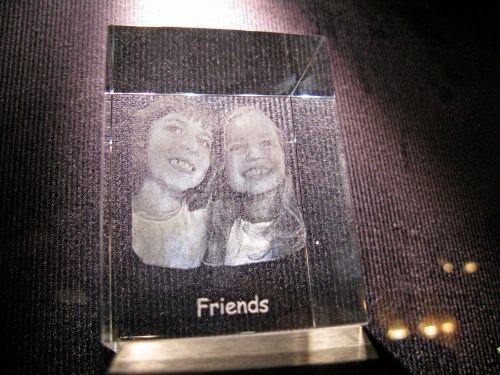
Unfortunately we didn’t have time to get one made for ourselves; as so often happens when we travel, we reflect back and think: maybe next time.
Filed under: Capitalism, Dissonance, Ruins, Search, Travel | 2 Comments
Tags: Bizarre Souvenirs, Cyrstal, Munich
In which The Gay Recluse freezes to death.

It goes without saying that nothing is black and white.
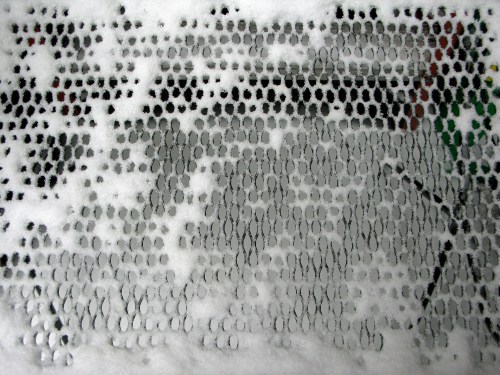
But at the moment it feels like nothing is gray, either.
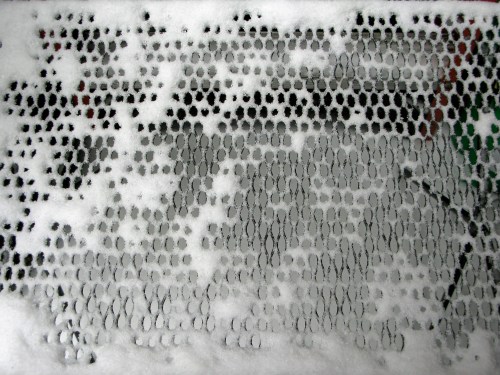
It’s more like there are layers of perception, some of which are made of iron, and some of which will melt away.
Filed under: City Pattern Project, Dissonance, Faith, Gay, Health, Weather | 1 Comment
Tags: Black, Gray, Overwrought Metaphors, Snow, White, Wrought Iron
In which The Gay Recluse dreams of snow.

On certain days, we are made aware that capitalism is a vast, raging sea on which we are helplessly adrift.

It’s not that this is exactly news; to the contrary, we have always known this, much the way the earth is round and the sun is many millions of miles away. But when we were younger — before we spent so many years on these turbulent waters — we didn’t understand the true expanse of this sea, and how one day it would threaten to swallow us up in its infinite depths.

Nor in our youth did we understand that picking the right boat would matter so much; that those others we mocked for being slow or stolid or inelegant would be the same ones toward which we would look with such longing in a storm, when it was no longer possible to board them.
We remember how beautiful our first boat locked on the dock — with its “wooden beams and dovetail joints,” the way its sails seemed to be woven with golden thread — and how quickly it sank as soon as we lost sight of the shore.
And how we swam to the point of exhaustion until, on the verge of drowning, we finally managed to crawl up on a second boat, which though not as striking as any we had ever imagined sailing, at least seemed to offer a certain stability for which we were grateful; it was old but sturdy on the water, and populated by seasoned hands who assured us that this vessel had crossed the ocean for hundreds of years and could expect to do the same for hundreds more.
But who could have anticipated the storms with which this boat would be confronted? Everyone felt seasick from the onslaught of the waves — each a mountain on an endless, mutating range — which never ceased to crash over the decks and rip holes in the sails. During any respite, we discussed the idea of designing something new — more buoyant and fleet — but our time was spent plugging holes below and mending the sails. Everyone looked at each other and shrugged: it was understood that a disaster was imminent, but what choice did we have but to make our way forward as best we could?
But the sea was not content to let us muddle along, and in fact — as if driven by vengeance — made a point to break our masts and blow us off course into even more unfamiliar waters, where nothing seemed to work; to catch even the most common fish was a strain, and all of our lines went slack.
Did you ever see that teevee movie in the seventies, when the ship sank and it gradually became apparent that not everyone would be allowed to remain on the lifeboat, and that some would have to be sacrificed for the good of the whole? And how everyone looked at each other with terror and understanding, knowing that they would have to implement this plan? Did you see that movie on teevee? And were you also terrified when the old married couple volunteered to be cast adrift, clinging to one another with their tired fingers? And then a single lady who was probably a lesbian because even back then everyone knew that gays were worth less than other people? And did you cry when they sent the dog overboard, because how could a dog ever understand that it wasn’t just going for a lil swim?
We never realized that this horrible movie could be a metaphor for so much.
And that one day we would be on a sinking lifeboat, living in terror at the idea of being cast off and feeling guilt for remaining behind (because we’re gay and always feel inherently less valuable).
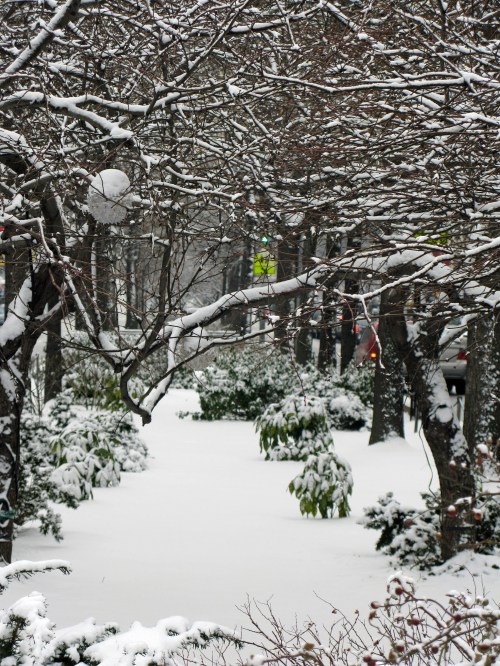
Or that our dreams for a hundred nights running would be filled with nothing but stillness and snow.
Filed under: Capitalism, Communism, Competitions, Conspiracy, Dream, Gay, History, Memory, Resignation, Ruins | 7 Comments
Tags: Depressions, Drama Queens, Fables, Layoffs, Metaphors, Recessions, Swan Swan H
In which The Gay Recluse makes a teevee show for the internets.*
In Part 3, Chaos Detective Lasalle follows “the Russian” onto a train headed for Munich.
YouTube Clip below (click through to watch in high-res, or go to our FaceBook page!)
THE CHAOS DETECTIVE
Episode 1: City of Dreams (Part 1)
Episode 1: City of Dreams (Part 2)
*Sigh…if only the economy were better, our attempt at an improvised/ impressionistic/ plotless/ gay/ noir/ Proustian/ travelog/ detective teevee-series-for-the-internets would be making a lot more headway and drawing in big-budget production $$$$ from Holleewoods.
Filed under: Architecture, Conspiracy, Dream, Gay, Longing, Memory, Search, Technology, The Chaos Detective, Travel | 1 Comment
Tags: Detective, Munich, Mysteries, Noir, Trains, Travelogs, Vienna
In which Zephyr adjusts to the tides of the universe.
Hey everyone, our Feedburner account is getting swallowed up by Google, so if you have any problems with the e-mail subscription or RSS feed, please let us know. We’re terrified of losing you! xoxo,
Zephyr/Technical Assistant/The Gay Recluse

Filed under: Capitalism, Conspiracy, Technology, The Russian Blue, Traffic | 2 Comments
Tags: Feedburner, Google, Lost in the Mail, RSS, Zephyr
On Netherland
In which The Gay Recluse recommends a book about loss.

In Joseph O’Neill’s Netherland, we meet a narrator “Hans” — a Dutch expat originally from The Hague — who both at the beginning and the end of the story (this is not a spoiler, because we learn this in the first few pages) appears to”have it all”: relative youth and good health; an intelligent, beautiful wife; a well-mannered, inquisitive son; and a high-paying job as an oil analyst for an i-bank. The difference between the beginning and the end is that — besides the fact that his son is now a boy instead of a toddler — the narrator has moved to London from New York City, where most of the book is set.
What transpires in this interval are the events with which we are all on very intimate terms, i.e., 9/11, the invasion of Iraq, the power-outage/blackout when everyone “felt good” about the city again, and the floats that went crazy a few years later on that windy Thanksgiving Macy’s parade. Fortunately for us, O’Neill does not devote a lot of time describing any of this, but simply uses these circumstances to frame a generally bleak mood made all the bleaker by the fact that — for mostly inexplicable reasons (at least on the surface) — Hans’ life is falling apart. In the wake of 9/11, his freaked-out wife decides to move back to London but basically disinvites him from coming along, leaving them in a period of indeterminate reassessment that feels very much like a state of purgatory from which he might never emerge. Meanwhile — though he continues to rake it in at work — his enthusiasm for the job is waning, and his only friend gets the axe.
What happens as a result of all this is that Hans goes for a walk on the wild side, relatively speaking. But unlike so many characters throughout the history of New York — both real and imagined — Hans does not turn to the time-honored traditions of drugs, alcohol or sex (well, he has a lil sex) to assuage his demons, but instead — and this, a big part of the appeal of this book — becomes obsessed with cricket, a game he played in his youth. At a match in Staten Island, he serendipitously meets the other most important character of the book, a Trinidad native — a man in his fifties named Chuck — who lives in the middle of Brooklyn.* Chuck is something of an archetypal Brooklyner, i.e., a wheeler-dealer with a million scams and pipe-dreams who drives a Cadillac, knows enough about many things to sound intelligent (but is never pretentious) and ultimately seems maybe benign, so that we can understand the allure he exerts on the more staid (but increasingly desperate) Hans, even as we also grasp his reluctance to get too involved. In short, with Hans, O’Neill offers us a classic case of a character whose head says “no” but whose heart says “yes.’
*We used to call the neighborhood “Beverly Square West” and, as a result having recorded two albums there, recognized many of the streets O’Neill describes — Cortelyou, Ocean Parkway, Coney Island Avenue, Flatbush — and remarkably or not, even some of the individual houses!
While this is perhaps not the most elaborate structure, O’Neill adorns it with exquisite detail, so that we are continually focused on the lush, insightful prose, much of it used to describe New York — but without any trace of nostalgia — and the rest to deconstruct both the attraction and ambivalence Hans feels for Chuck, while weaving into this narrative memories of his childhood and — finally — the continuing tension with his wife. O’Neill’s dexterity in this regard is particularly important — and remarkable — because none of the characters is particularly “likable,” i.e., Hans — except for his strange obsession — is a tepid drink of i-banking/Tribeca-loft-owning water, while his wife (even from London) tends toward the shrill/unfeeling/politically correct, and Chuck is just a little too sleazy for us to invest in.
But we were gripped anyway; besides the fact that O’Neill knows how to deliver a good story, what ultimately interested us was the idea that it could basically be read as “gay,” even though any such context (like so much in our society) is buried 100 miles beneath the surface of Hans’ carefully constructed veneer (i.e., there’s not even the slightest acknowledgment of any homo-attraction anywhere, although there are enough “gay” symbols and peripheral characters to keep the thesis afloat, as it were). Still, the fact remains that this book is primarily about the obsession of one man for another, with the former representing everything conventional (and most often, tedious) about society, and the latter offering a window into the far-more-exciting-albeit-dangerous “other” (which besides obv ethnic/class differences extends to the sexual to the extent that Chuck is very open about having a wife and a mistress.)
It was for this reason, when — at the end of the book — Hans returns to the fold (i.e., to his wife and child in London, a city that essentially bores him), and despite his own protestations of hope and redemption, we are left with a bittersweet sense of loss, as if during his interlude in New York, he had finally managed to kill that part of himself that was most alive.
Filed under: Brooklyn, Decay, Literature, Pessimism, Ruins, Search, Writers-Irish | 1 Comment
On the George Washington Breathing Project: Good Steam Versus Bad Steam Edition (Includes Roundup!)
In which The Gay Recluse rather quickly dies of lung cancer.

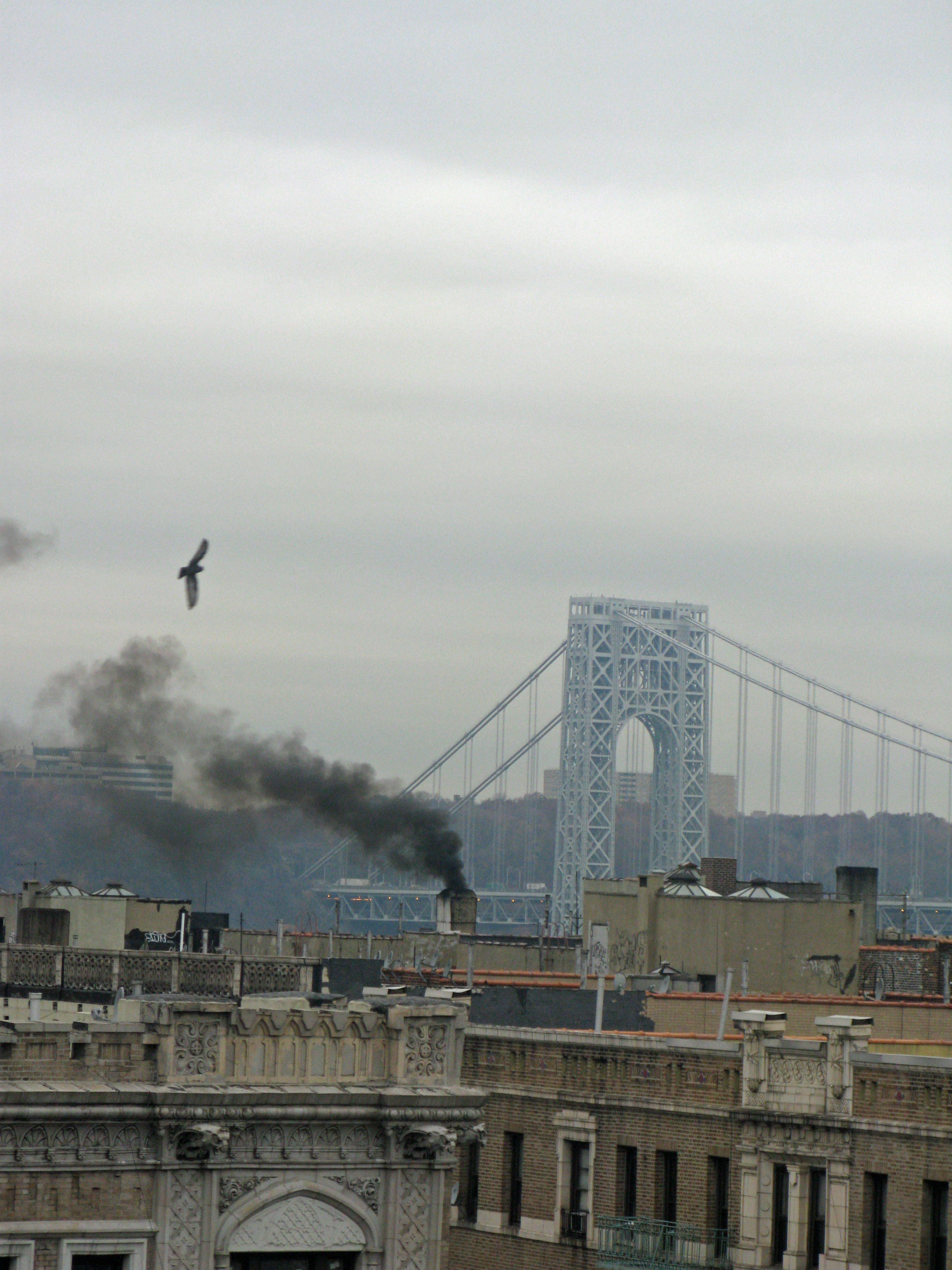
Some winter mornings, we wake up and consider the rooftops of Washington Heights, where — thanks to the sumptuous pre-war architecture, the expansive breadth of the Hudson and the gentle rise of the Palisades — we are charmed by the wisps of steam that trail from the chimneys; there’s something surprisingly bucolic about the scene, as if we were watching a village in the Bavarian Alps and not the most densely populated neighborhood in the country.
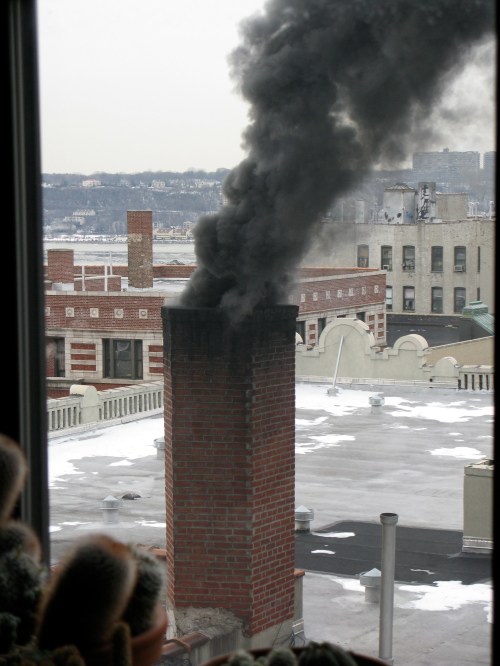
And then we see this (from 38 Fort Washington Avenue, not that they’re the only offender) and remember that we live in a city that cares nothing about its poor.
There is, however, some solace to be found in the idea that nothing we can do will ever change this, and our only hope is to escape.
The oily black smoke of 100-year-old boilers disperses daily across the rooftops in Washington Heights, heedless of those who suffer from pneumonia, asthma and tuberculosis. Officials and politicians? Not even footnotes in this story, which is about the aggregation of capital and the relentless rise of the metropolis.
The Wahi Lung Cancer & Asthma Roundup!
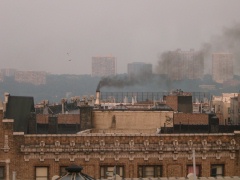


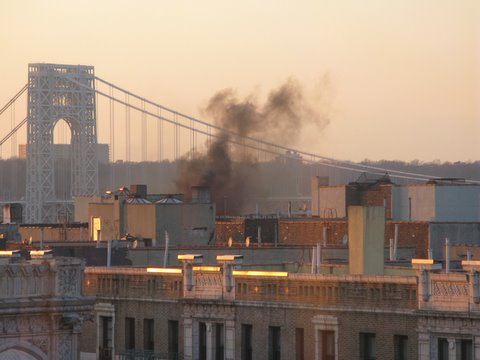

April 11, 2008 (Special Investigative Report)
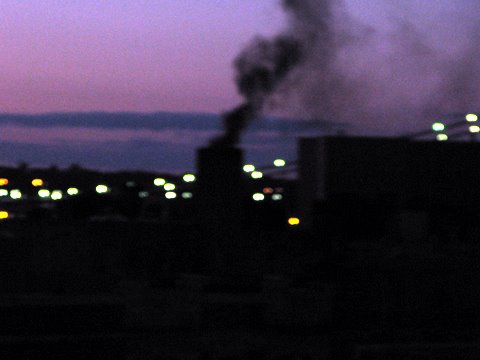


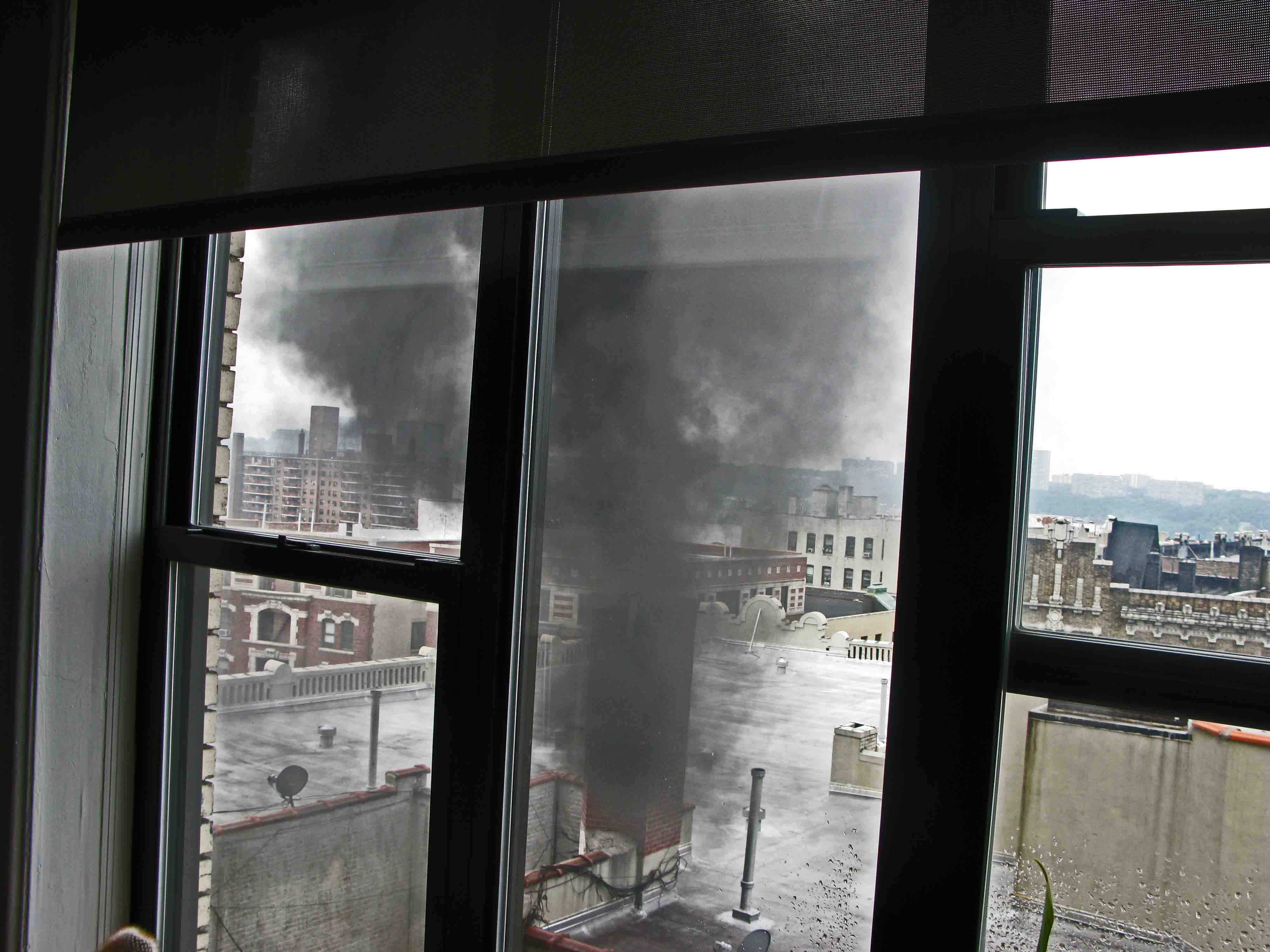
Filed under: Architecture, Capitalism, GWB Project, Health, Pessimism, Politicians, Science, Technology, Washington Heights | 1 Comment
Tags: Asthma, Boilers, Ghettos, Lung Cancer, Slumlords, Smoke
On The Rest Is Noise
In which The Gay Recluse recommends a book about music.

When we finished The Rest Is Noise, Alex Ross’ survey of twentieth-century (classical-ish) music, our feelings were mixed; not about the book, which — as we are hardly the first to point out (Google it!) — works brilliantly on many levels. It’s really beyond our comprehension (and remember: we worked in a record store) how anyone could have digested so many strains of music and then presented them in such a carefully ordered manner but without any condescension, so that our interest never flagged, though we were unfamiliar with large swaths of what he describes. He writes about the most challenging music with a neo-Romantic enthusiasm — and deep optimism — that’s frankly disarming (think Benjamin), so that even a misanthropic curmudgeon like us was sighing with admiration at the lyrical prose as we flew through the chapters and sections as if they were pages in a novel. (Ross also has a great blog.)
Although there are clearly some composers (and schools of music) he doesn’t admire as much as others, he shows most everyone (except for maybe the early Pierre Boulez, whose cold-hearted didacticism makes him a bit of a post-war villain) a level of respect and admiration that practically had us rushing out to explore not only the the lesser-known works of say, Stravinsky, Cage, Sibelius or La Monte Young, but also the worlds of say, free jazz or microtonal symphonies, which — it’s fair to say — would not be our usual inclination.
As much as this book is about music, Ross is always careful to tie musical history to parallel developments in art and literature — even architecture — so that we have a sense of what’s driving the composers (unconsciously or not) as they move from one (musical) revolution to the next. He’s also very sensitive to the fact that most if not all of the major composers he writes about are men, and that many of them were gay, and how this may or may not have effected their standing (but he’s careful to bring women into the narrative whenever possible, mostly in his discussion of the present). Perhaps most important, there’s a constant theme of geography in the book, and we become keenly aware of the landscape — mountains, deserts, forests, and villages (along with the surrounding people and their traditions) — from which the music arose; more than anything else, this gives the book soul, as if we were reading not about a series of individuals (and their disparate works), but being shown the contours of a larger map — albeit a constantly mutating and kaleidoscopic one — on which we all have our place. No artist here is an island, with the implication that — as readers (and fellow humans) — neither are we.
It was this revelation that led us to consider our own past with more than some regret as we remembered growing up in the AOR/FM-rock wastelands of 1970s suburban Pittsburgh, where our musical diet consisted primarily of Led Zeppelin, Aerosmith, and The Who. Though our mother hoped to interest us in classical music — she was always joining record clubs and trying to drag us downtown to the symphony — our father was ambivalent; unstated was the certainty — and this tacitly recognized by society (albeit on a level at which we were not even cognizant) — that it was WAY too gay for us to pursue with even a fraction of interest. Although we “branched out” in high school and college, and gradually worked our way through just about everything from the Zombies to the Shaggs to Spacemen 3 and Galaxie 500, even after we moved to Brooklyn and started a band (and worked in a record store, wtf), we remained in a musical ghetto, where anything classical was essentially smuggled in through unauthorized channels. So in this respect — given our late-blooming interest in opera — it was somewhat disheartening to read about so much interesting music from which we had largely walled ourselves off, and for the most regrettable of reasons. (“Sorry Ma, we have a game that night.”)
We think of our younger self and the countless others who remain in the same position, and how many of them — unlike us — will never give themselves the chance to escape. In this respect, The Rest is Noise struck us as something of a manifesto; it’s not so much promoting the idea that you have to listen to this or that piece of music, because in the end, it’s all part of the same fabric; but rather it’s a mandate to open our ears (and mind) to the world around us, with the implication that nothing short of our humanity hangs in the balance.
Filed under: Bad Rock, Gay, Good Rock, History, Landscape, Literature, Writers-American | 5 Comments
Tags: Aerosmith, Alex Ross, Classical, Free Jazz, La Monte Young, Led Zeppelin, Pierre Boulez, Pittsburgh, The Rest Is Noise, The Who, Walter Benjamin, WDVE
In which The Gay Recluse orders Sachertorte.

In the United States — except for the rare exception — there is a well-documented dearth of hot gay statues.

Occasionally you’ll see a statue and think, “hmm, he’s a lil gay.” (Or she, obv.)

Or: “Why is that guy’s head between that other guy’s legs? It’s not that gay, but — ha ha — we should send a pic to The Gay Recluse.”

And then you go on your way, and perhaps in a year or so — assuming you don’t leave the country — you might spot another statue or piece of public artwork that could be described as gay, with a mix of earnestness and irony that is a hallmark of internet discourse.
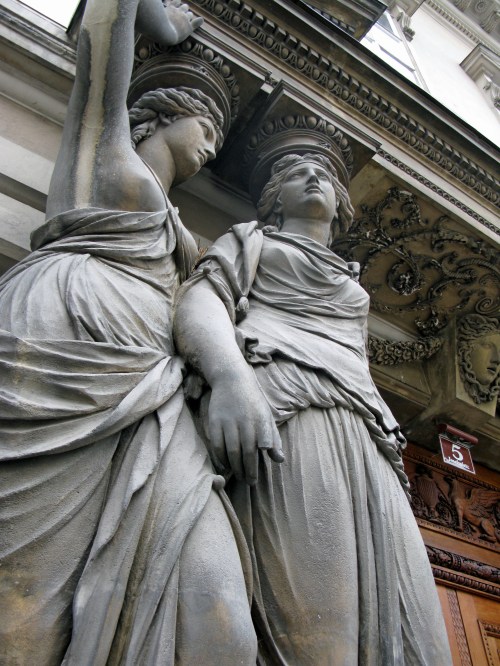
Hi ladies! Did you know that the final season of “The L-Word” premieres this Sunday?
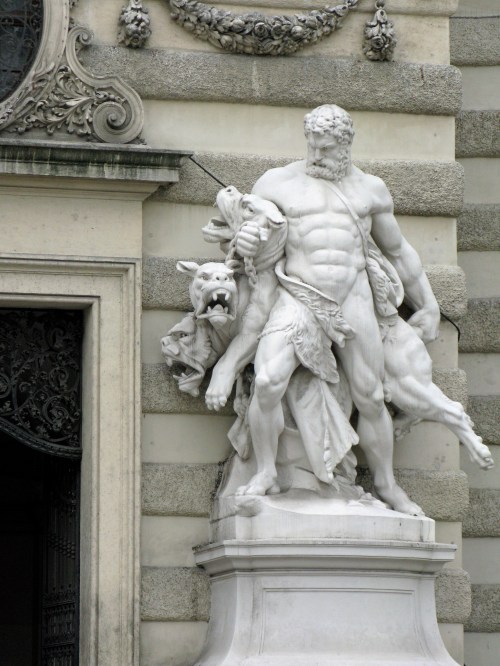
Whoa, Daddy!
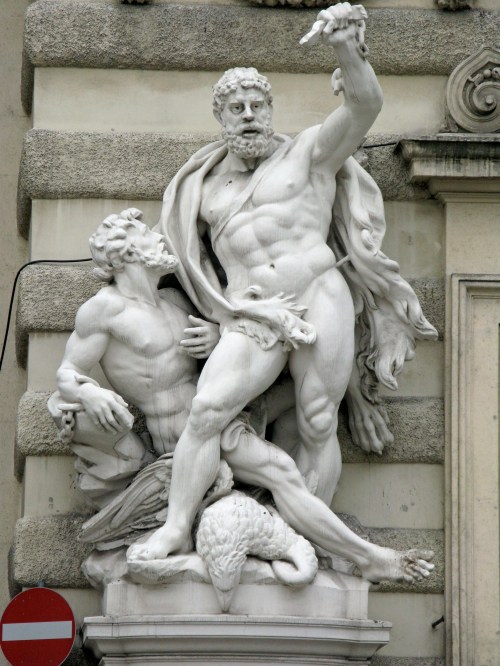
Let’s just say that in terms of hot gay statuary, Vienna operates on a completely different level than any U.S. city.

It’s not like this was unexpected, of course.

And at first, we didn’t think too much about it.
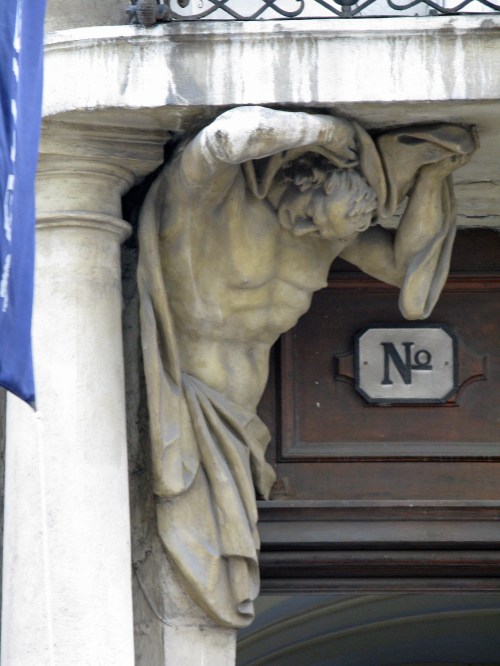
After all, our primary purpose in coming to Vienna was not to obsess about hot gay statues.

Hey buddy, nice package! (Was Johann Strauss the “David Beckham” of 19th century Vienna?)
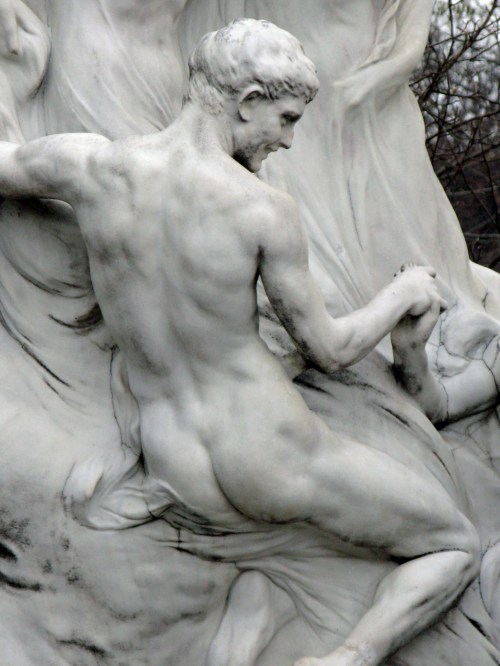
Here’s a gay in Vienna “playing straight,” just like today’s biggest stars in Hollywood.
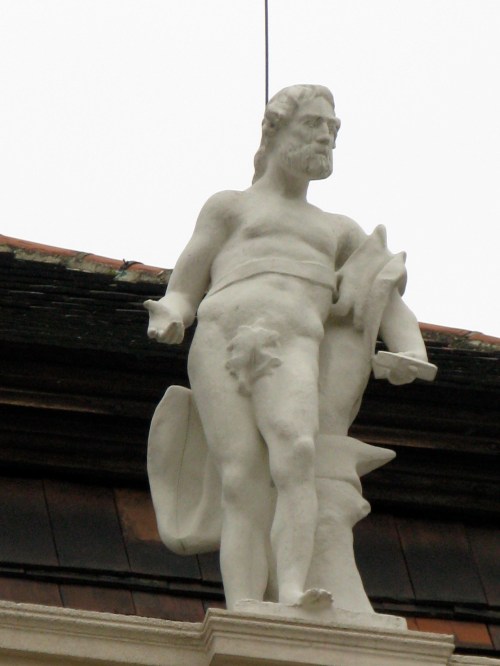
While almost every statue in Vienna was exceedingly gay, not all were equally hot!

At night, there was a phantasmagoric quality to the statues, that made many seem NSFW.
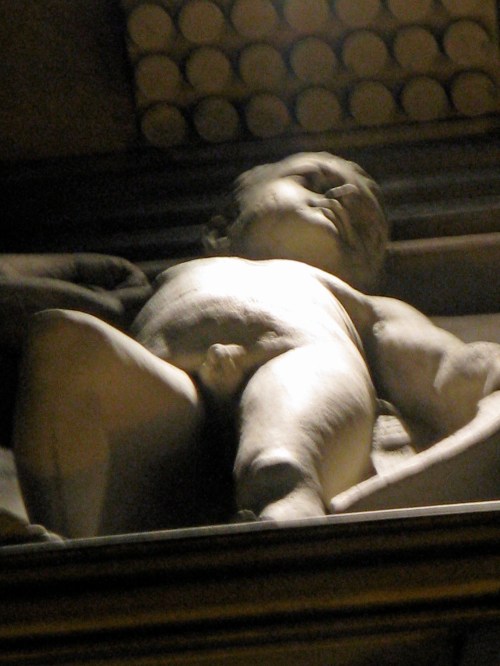
We wouldn’t call this “man-baby” hot, would you?
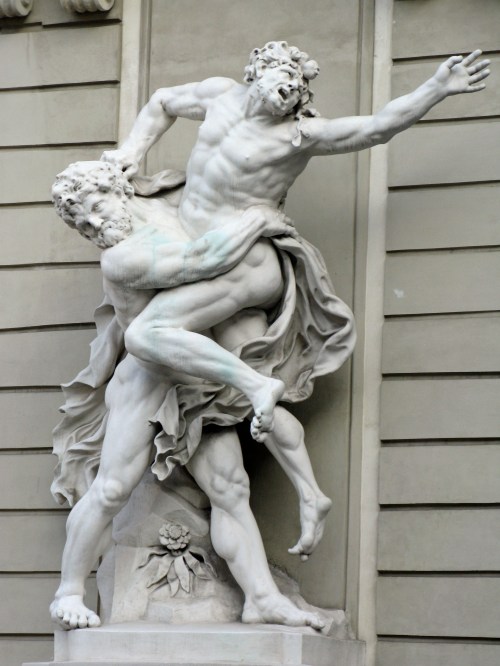
This guy just won’t take “no” for an answer!
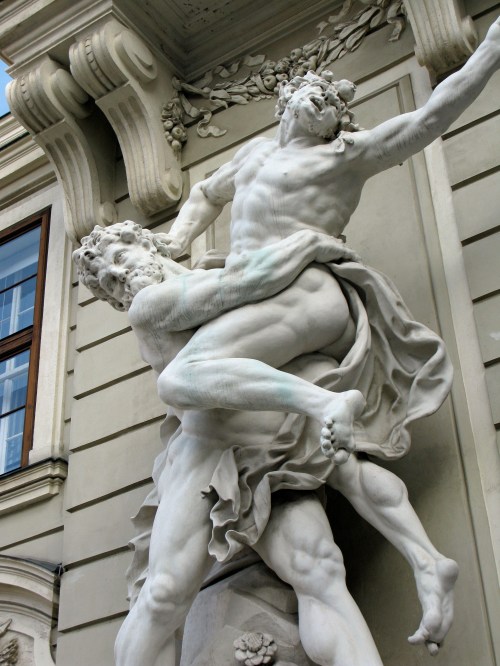
Some required more than one shot to capture exactly what was going on.

It’s not hard to figure out what happened here!

Oddly, as time passed, we became less innured to their presence, which was not what we had expected.

We began to consider the mindset of those who commissioned such work, and why they were so interested in “hot dads.”

We resented the puritanical tendencies of our own country, which for hundreds of years has made even the most innocuous statues NSFW.
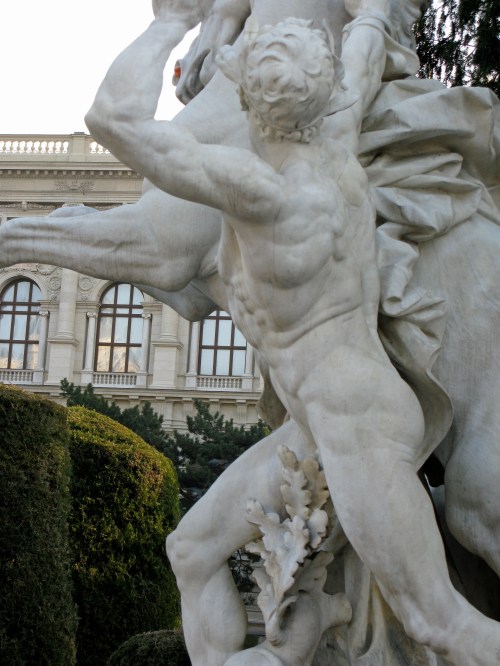
We considered the drudgery of our own commute in New York City, and how we never see a hot-gay statue without making a special trip to Audubon Terrace.

Hey girlfriends! What do you mean you haven’t seen Milk yet!?

We wondered: why does our contemplation of this statue offer us so much more pleasure than any of the tedious shots of “real-life” models we see every day on all the mainstream gay sites?

Translation: Every one of these guys is smokin’ hot.

Translation: Workers unite (for a hot gay revolution)!

Vienna’s hot gay statuary is obv not limited to the neoclassical.

The more we looked, the more statues we saw; many of them contained features — and more incredibly, expressions — we found genuinely attractive, so that our posture of ironic disdain began to feel limiting.
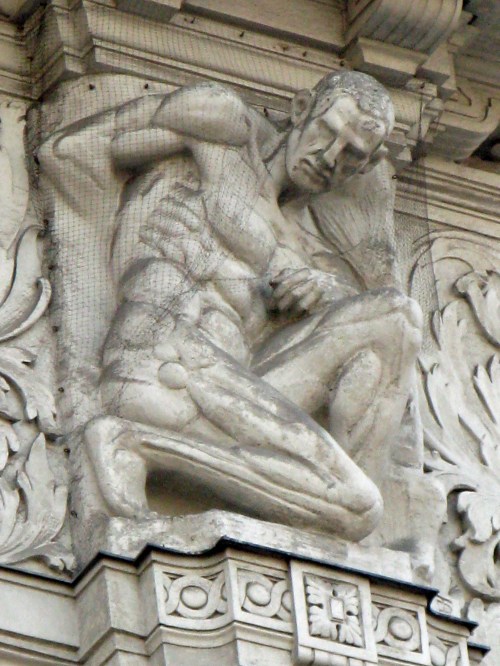
Overwhelmed, we questioned the movement toward abstraction that occurred 500 years ago, when Pablo Picasso first heard Franz Liszt and was inspired to create a reality teevee show on Bravo.

We could not completely shed this irony, however.

Just your average fountain statue in Vienna.
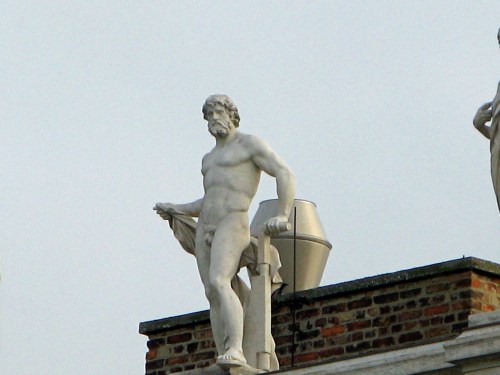
As so often happens when we lose ourselves the past, we felt an intoxicating mix of suffocation and exhilaration.

It seemed miraculous to us that the roof of the Parliament could feature a lineup of NSFW men.
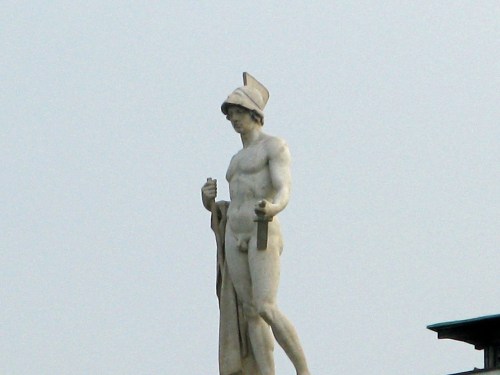
By this point, our resistance had completely eroded.
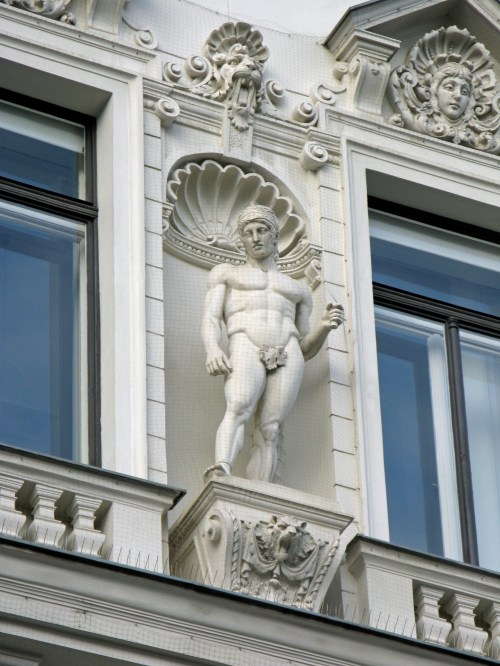
Seemingly every alcove was inhabited by a hot gay statue.
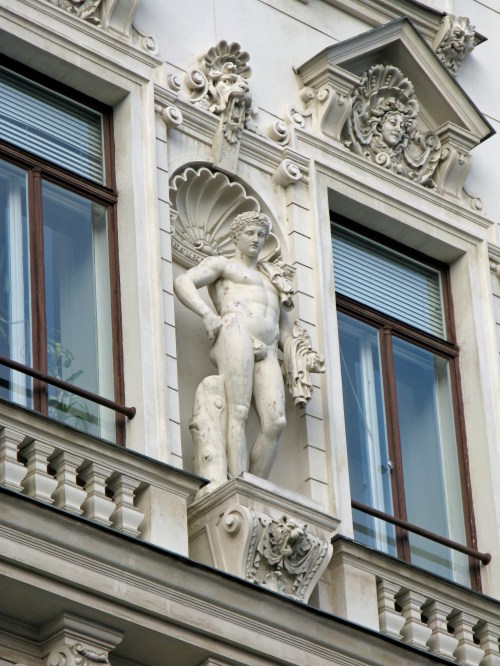
We felt as if our hatred of the present — not only the time in which we live, but the tedious, mass-produced nature of our surroundings — had been validated.
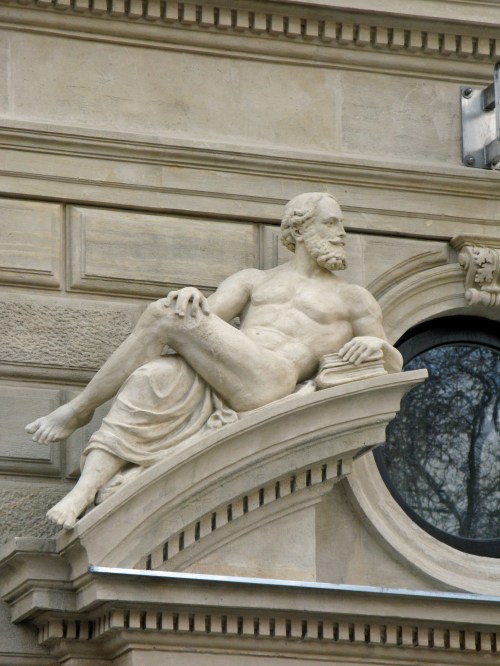
But in the next second, we felt deflated and beaten.
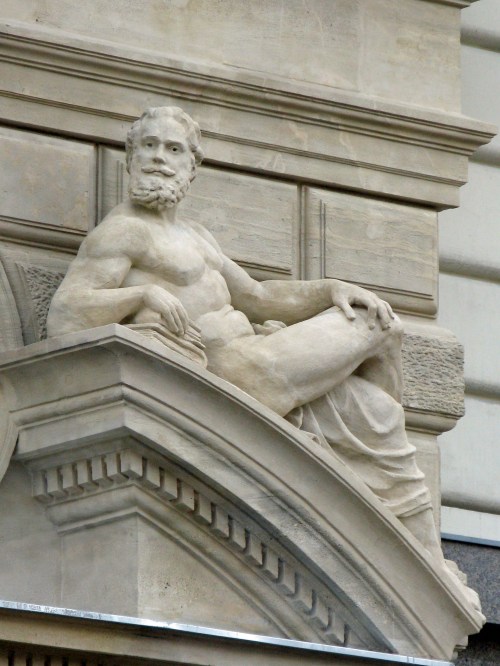
We arrived at Gonzagagasse, the street where our friend John had grown up.

And thought about how he must have felt as a child, walking past these hot gay dads every day.
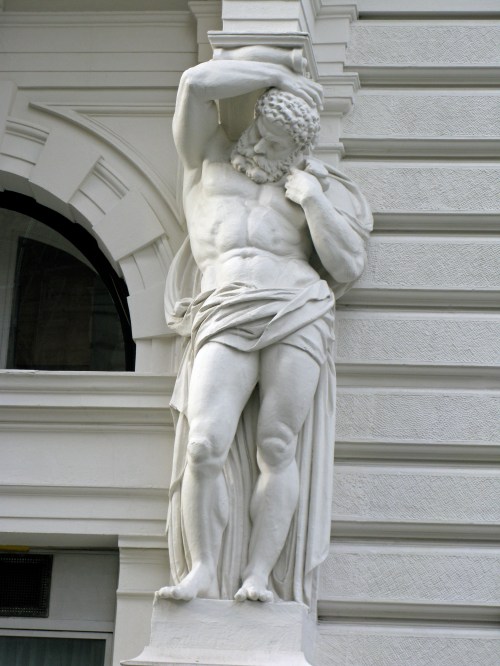
Until the Nazis came to power and he had to flee to the United States.
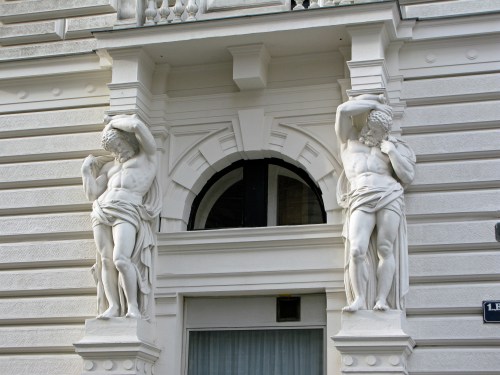
Where he too would always remember life in Vienna with an irreconcilable mix of hatred and longing.
The Hot Gay Statue round-up:
- Rules and Guidelines
- Dan Savage Endorsement
- Washington Heights (New York City)
- Washington, DC
- The London Eye Clarifies an Important Issue
- Florence (Italy)
- The Park Avenue Amory (Upper East Side/NYC)
- Murray Hill (New York City)
- Madrid (Spain)
- Los Angeles
- Philadelphia
- The London Eye: “In Your Face”
- The J-Man Inspires
- George Washington
- Georgia (Republic of)
- New Orleans
- Columbus Circle (New York City)
- Two Davids (Florence)
- Franco Harris Statue (Pittsburgh)
- London Firefighters and Other Heroes
- Columbus Circle Mall (New York City)
- Miami
- Paris
- Grand Central Station (New York City)
- Albany, New York
- Chicago
- Albany, New York (Hot Gay Statute)
- The Metropolitan Museum (New York City)
- University of Southern California (Los Angeles)
- More Getty Villa (Los Angeles)
- Union Station Centurions (Washington, DC)
- Hot Gay Ladies in Washington Heights (New York City)
- Honolulu
- Stockholm
- Florence (Italy) II
Filed under: Capitalism, Communism, Competitions, Conspiracy, History, Hot Gay Statues, Infrastructure, Landscape, Search, Sickness, Stereotypes, Travel | 5 Comments
Tags: Audubon Terrace, Bravo, David Beckham, Franz Liszt, Gonzagagasse, Johann Strauss, Models, NSFW, Pablo Picasso, Parliament, The L-Word, Vienna
In which The Gay Recluse goes to Paris.
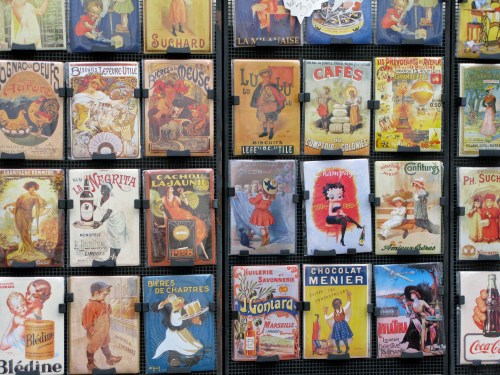
One thing that never seems to change in Paris: the booksellers — les bouquinistes — that line the banks of the Seine.
These are the ones who operate out of those green metal boxes that sit atop the balustrade. Obviously this could never exist in the United States; the boxes would be pried or sawed open, filled with gasoline, the contents incinerated and the video posted on YouTube. (There would be lawsuits, tho.)
In Paris, we always loved strolling past the dealers and their wares, carefully considering what we wanted to buy: old maps, postcards, rare editions of forgotten books, drawings of fish and birds, comic books — typically racist/sexist in the “old school” manner — and more!
But in the end, we could never bring ourselves to buy anything. It was less a suspicion that we would probably buy a fake than something about the vision in front of us that made it feel precarious, as if it were a dream that we might puncture by reaching through.
Or maybe it’s a fear that if we entered such a world, even for a few minutes, we might not have the will to ever leave; we would slowly evaporate and our ghost would walk the banks of the Seine until it was covered by the sea, and even then we would haunt the bottom of the ocean for an eternity, rummaging through the detritus of another lost civilization.
Filed under: Capitalism, City Pattern Project, Communism, Decay, Dream, Flatware, Infrastructure, Landscape, Search, Travel | 5 Comments
Tags: Booksellers, Bouquinistes, Comics, Paris, Seine
In which The Gay Recluse considers a subterranean masterpiece.
Our friend Paul just sent us this from his phone:

“So what if I voted for McCain?” OMGLMFAO!
We’re not sure exactly where this was taken, but Paul lives in Harlem, so we’ll give our downtown neighbors credit for this piece of brilliance. (But Paul would also like you to click here, too.)
[Correction: Paul took the shot at the downtown Bleeker Street station, but whatevs, we still love Harlem!]
Filed under: Capitalism, Food, Graffiti, New York City, Subway | 1 Comment
Tags: Harlem, John McCain, MTA, Subway Fast Food, Subway Transport
In which The Gay Recluse holds a contest. Sort of.
Recently we heard from Mike, an American expat (and blogger!) living in Denmark who writes:
I didn’t know about your blog this summer when I went to Florence, but now that blog-whoring’s brought us together, here’s a humble contribution:
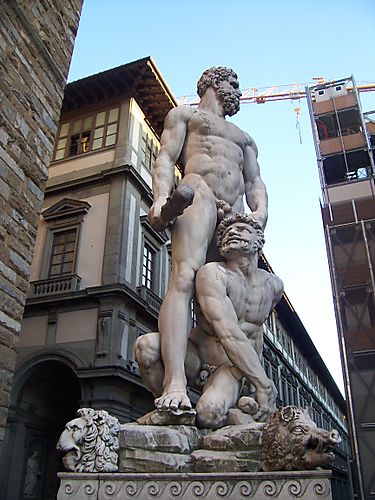
Though we’ve already covered Florence — and this statue specifically — we wanted to take the opportunity to demonstrate a fundamental point about hot gay statues that has been missed by some of our less enlightened readers. Anyway! Here’s the shot of Hercules and Caucus (courtesy of Wikipedia) from the original post:

A lil hot and def gay, but kinda whatevs.
Now let’s compare with Mike’s shot of the same statue:
Whoa. Smokin’ hot. Srsly gay.
Need we say more? We think not!
Thanks again to Mike for his most excellent submission.
The Hot Gay Statue round-up:
- Rules and Guidelines
- Dan Savage Endorsement
- Washington Heights (New York City)
- Washington, DC
- The London Eye Clarifies an Important Issue
- Florence (Italy)
- The Park Avenue Amory (Upper East Side/NYC)
- Murray Hill (New York City)
- Madrid (Spain)
- Los Angeles
- Philadelphia
- The London Eye: “In Your Face”
- The J-Man Inspires
- George Washington
- Georgia (Republic of)
- New Orleans
- Columbus Circle (New York City)
- Two Davids (Florence)
- Franco Harris Statue (Pittsburgh)
- London Firefighters and Other Heroes
- Columbus Circle Mall (New York City)
- Miami
- Paris
- Grand Central Station (New York City)
- Albany, New York
- Chicago
- Albany, New York (Hot Gay Statute)
- The Metropolitan Museum (New York City)
- University of Southern California (Los Angeles)
- More Getty Villa (Los Angeles)
- Union Station Centurions (Washington, DC)
- Hot Gay Ladies in Washington Heights (New York City)
- Honolulu
- Stockholm
Filed under: Architecture, Hot Gay Statues, Infrastructure, Landscape, Photography, Pleasure | 4 Comments
Tags: Denmark, Expats, Florence, Hercules and Caucus, Photographic Eye
In which The Gay Recluse produces a teevee series on the internets.
The Chaos Detective: City of Dreams (Part 2)
In this episode, Chaos Detective Lasalle arrives in Vienna and embarks on his first assignment.
[Note: if you click thru to YouTube, be sure to watch in “high-quality”: otherwise it’s kinda blurry/fuzzy!]
THE CHAOS DETECTIVE
Filed under: Conspiracy, Dissonance, Dream, Infrastructure, Landscape, Longing, Ruins, Search, The Chaos Detective, Travel | 2 Comments
Tags: Cafe Central, Sachertorte, St. Stephen's Cathedral, Vienna
In which The Gay Recluse recommends a scholarly work.

Recently we heard from Scott Gunther, an old friend of ours from college (we also spent a semester together in Paris) and law school. Scott is now a French professor at Wellesley — i.e., he’s practicing as much law as we are, lol — and it turns out that he’s just published a book on the history of homosexuality in France.

Our memories of Scott are not extensive, due to the fact that we did so little to cultivate the relationship when we had the opportunity, a result of our own closet-case insecurities. But what we do remember was his startling ability to speak French perfectly — actually, it was beyond perfect, somehow even better than most native speakers — so that his thick-tongued classmates (and sometimes, the professors) were left with their jaws on the floor. By some fluke of scheduling, we ended up in the same class during our first year at Cornell, and despite having taken the language since seventh grade, we could barely say our name and count to ten; Scott, meanwhile, could hold forth on complicated, esoteric (but important) subjects such as what you will find within the pages of his new book.
Although we can still only dream of speaking French with the grace of Scott Gunther, we have learned to love and appreciate the country to an extent that we like to think — at least in some ways — parallels Scott’s devotion. When we were younger, we used to say that there were people — Scott was a good example — who were more French than American, and it was only a fluke that they had been born in this country; we now understand that we were really describing an unconscious (at least at the time) desire of what we wanted to become, i.e., more French than American. (Though we would no doubt say the reverse if we were living in France.)
It’s for this reason that we look forward to buying and reading Scott’s book, and encourage everyone else to do the same. We welcome any book that promises to shed light on a society that’s both more and less evolved than our own, and thus has much to teach us in both respects.
“Like any good closet, the French Republic has served both to protect and to restrain its gay citizens, keeping expressions of both pro-homosexual and anti-homosexual sentiment within a narrower range than has been the case in places like the United States – where both ‘gay pride’ and homophobia tend to be expressed more aggressively. The Elastic Closet examines the interconnected realms of law (from legal discrimination under Vichy to anti-hate speech legislation in 2004), politics (from the homophiles of the 1950s to distinctly French articulations of queer radicalism now) and the media (from postwar journals like Arcadie to Têtu and PinkTV today), with a focus on the relationship between French republican values and the possibilities they have offered for change in each of these three spheres. It is a reminder that in foreign places, other logics produce different, yet equally legitimate, strategies adapted to the constraints of their particular environments.”
Filed under: Gay, Landscape, Language, Letters, Writers-American, Writers-French | 2 Comments
Tags: Academic Works, France, Homosexuality, Scott Gunther, The Elastic Closet

Filed under: Capitalism, Competitions, Gay, Hot Gay Statues, Pleasure, Search, Stereotypes, Travel | Leave a Comment
Tags: Amenities, Do Not Disturb, Hotels, Service, Shhh, Sleep, Vienna
In which The Gay Recluse becomes increasingly obsessed with the George Washington Bridge.

In Europe, it often happens that we stand in front of an ornate building and think: “whoas, that would be a lot of work!” but we can still basically imagine how it was done, even if it took centuries. It’s like one of those houses made out of bottle caps.
But in a twentieth-century city like New York, many structures are simply beyond our comprehension. It almost seems as if some alien species came down and filled the landscape with these grand but improbable gestures.
Let’s say you were given the task of building a 100-story building, or a bridge across the Hudson. Would you even know where to begin? Where would you go shopping for the parts?
You might as well ask us to light the moon, which is why to see both — i.e., the bridge and the moon — in the middle of the quiet but brittle night delivers us for a second into a state of subdued reverence. Although we’re exhausted, we dread going back to sleep, knowing that the next time we wake up, it will be the sullen day.
Filed under: Architecture, Conspiracy, Dissonance, GWB Project, Infrastructure, Longing, Memory, Technology | 4 Comments
Tags: Full Moon, Night, The George Washington Bridge, Winter
In which The Gay Recluse goes abroad.

We’ve always loved stencils (especially of Andy Warhol), so when we were in Vienna, we spent a lot of time checking out the graffiti stencils. Some of it was maybe really cute? Except does anyone know what this means, or why this girl is laughing, or why 2×3=4? We hope it’s not neo-Nazi propaganda. (h8 skinheadz.)
[Update: Jeff from Gay Power Living writes: The girl is non other than Pippilotta Viktualia Rullgardina Krusmynta Efraimsdotter Långstrump, aka Pippi Longstocking! Pippi is THE poster child of the punk movement, the anti-Shirley Temple. Astrid Lindgren wanted to create a child character to introduce the concept of dissent, especially against rules of society that children were taught to obey as the truth and never question. I’m guessing the 2×3=4 was Pippi mocking adult logic, her favorite target of rebellion was against adults…]

This one is maybe a lil more obv. It’s a picture of Barack Obama Ronald Reagan an evil capitalist. Note that this stencil has two colors. Black and Blue = symbol? (h8 u, u$a.)
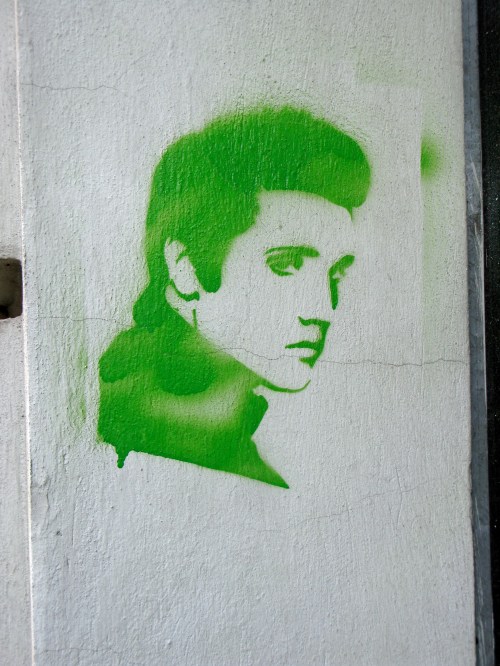
This one is sending a message: ___________ . (miss u/h8 u elvis)
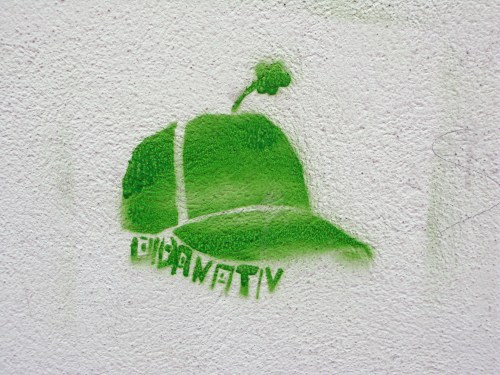
If this were ten years ago, we’d say this was a waste of film. (h8 baseball.)
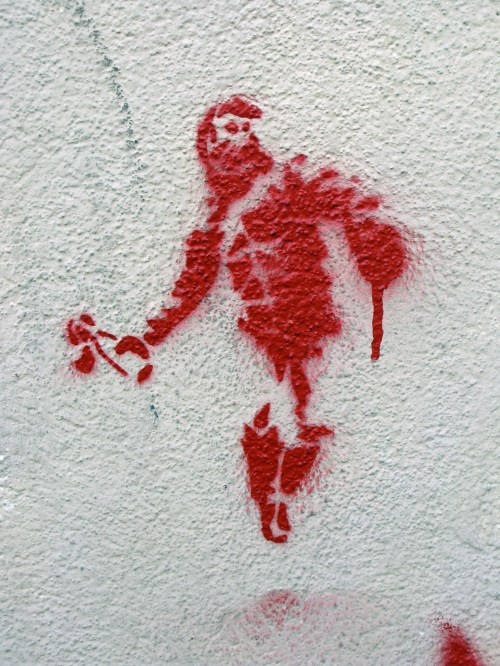
This guy is throwing a Molotov cocktail even though one of his hands has already been cut off and he will quickly bleed to death. A pessimistic commentary on revolutionary violence? (h8 when u get ur arm cut off and u bleed 2 death.)
Don’t you wish more graffiti in Wahi was done with stencils? (miss u Vienna/h8 you Wahi.)
Filed under: Architecture, Dissonance, Graffiti, Infrastructure, Landscape, Politicians, Stereotypes, Travel, Washington Heights | 1 Comment
Tags: Pippi Longstocking
In which The Gay Recluse dreams of decorating garden walls and office spaces.

While in Vienna, we visited the Secession Building. According to Wikipedia: “The Vienna Secession was founded on 3 April 1897 by artists Gustav Klimt, Koloman Moser, Josef Hoffmann, Joseph Maria Olbrich, Max Kurzweil, Otto Wagner, and others…In 1898, the group’s exhibition house was built in the vicinity of Karlsplatz…Secession artists were concerned, above all else, with exploring the possibilities of art outside the confines of academic tradition. They hoped to create a new style that owed nothing to historical influence.”
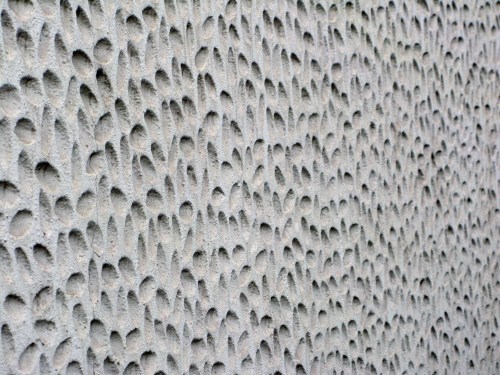
Looking at this, we thought of our own garden walls and how boring they are in comparison. Now every time we look at them, we’re going to wish they were covered with the same little leaf indentations as the Secession Building.
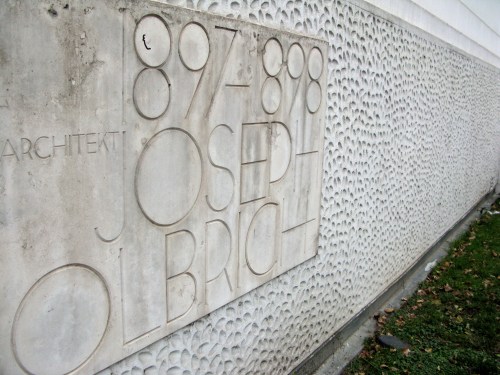
The fonts were already mod in 1898!
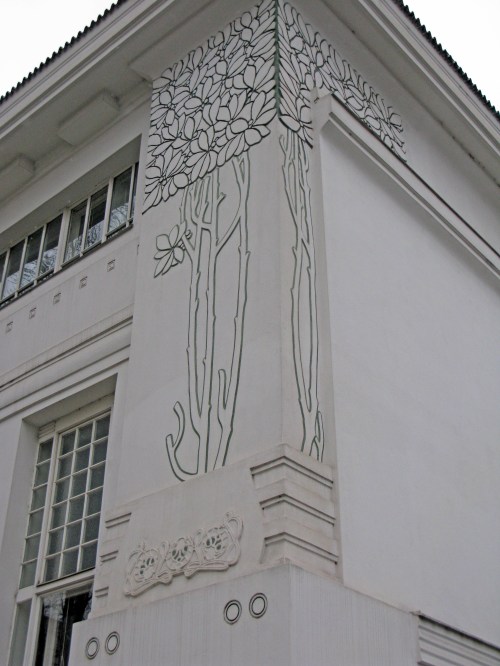
For years at work, we had always dreamed of painting our office walls with designs and patterns; we were sure this would make us much more “productive.” Before we visited the Secession Building, we were never sure of the exactly what this would look like.
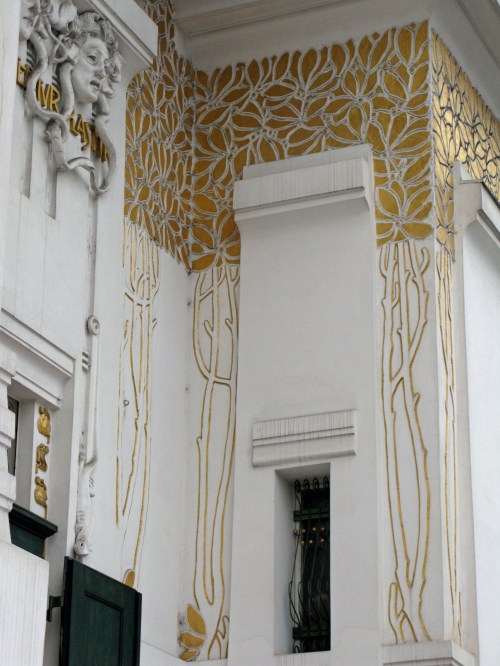
What if we said to our boss: do you think we could allocate some of our marketing $$ to gold paint and stencils? (Maybe if we worked at Google circa 2k6.)
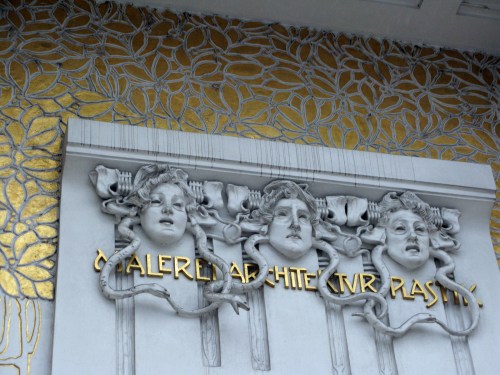
Did the world always seem so prohibitively expensive? For example, it cost us $_____ just to enclose our garden with cinder block walls faced with stucco. Of course we wish we had more $$ to fritter away on useless but beautiful things like this, but don’t you h8 when you’re watching teevee and Suze Orman comes on and starts yelling at some five-year old to start saving?
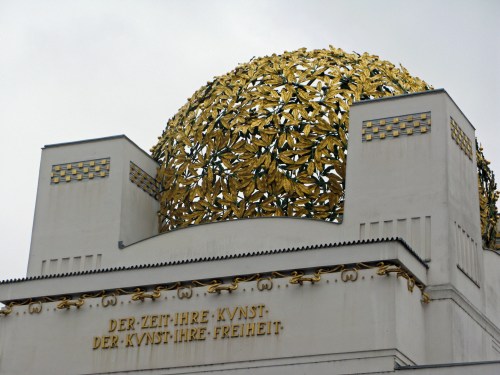
“To every age its art, to art its freedom.”

We would like to tell all children to spend $$$ on their own secession building, before they’re too old and it’s too late.
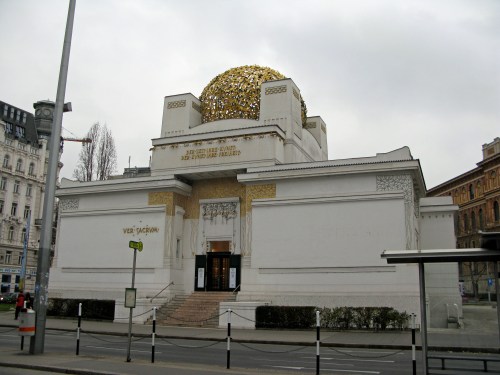
We got together a few months ago with a group of our fellow artists and built our secession building under the George Washington Bridge overpass, because that was the only place we could get for under $700/sf. We too hoped to create a new style that owed nothing to historical influence. Do you think ours will last until 2108, and tourists will take shots for their blogs?

“To every age its art, to art its freedom.”
Filed under: Architecture, Capitalism, City Pattern Project, Communism, Conspiracy, Dream, Fashion, Landscape, Pessimism, Ruins, Search, Sickness, Travel | 4 Comments
Tags: Art, Garden Walls, Jugendstil, Offices, Secession Building, Tedium, Vienna
In which The Gay Recluse ponders the fate of empires.

Prospective imperialists take note!
Today you may rule the world.
Tomorrow — just like the rest of us — you will have heartburn.
Filed under: Capitalism, Communism, Conspiracy, Politicians, Ruins, Travel | 3 Comments
Tags: Heartburn, Indigestion, Napolean, Vienna


 The Gay Recluse