The occasion: a brunch for eight in our Washington Heights apartment, scheduled to begin in exactly 3 hours and 48 minutes. Which is to say that it was 9:12 am and we were in the car racing south on the West Side Highway, having already vanquished the Fairway in West Harlem, where despite the early morning rush we barely broke a sweat procuring meyer lemons, Clementines, comice pears, scallions, hothouse cucumbers, campari tomatoes, fresh juice — orange and pomegranate — and a few other “non-essential” items; far more daunting, we acknowledged with twitching hands and eyelids as we exited the highway at 79th Street, would be to get home in less than three hours fully stocked with ample provisions to both maintain our reputation as a credible host and to inspire our guests — a group of work colleagues “stranded” in Manhattan over the holiday — with a spread from Zabar’s, which we had (perhaps a bit too cavalierly, it now seemed) already assured them would not only quell any homesickness, but surpass the quality of any such offering from their home cities (which included — and we could only shudder at the audacity of our claim in light of this — Paris, Berlin and Rome). In short, the honor of New York City seemed to hang in the balance, and though we could never pretend to be novices in the art of hosting — and at least in this regard we can note the table was already set — at this moment we were far from confident but at the same time more than willing to throw ourselves at the mercy of such epic and timelessly urban rituals.
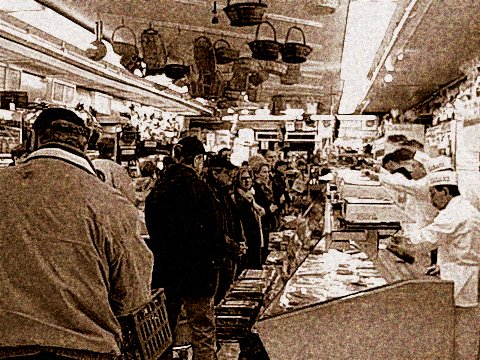
No doubt this is why, contrary to the dictates of logic, we did not buy the goods a day earlier; in fact, we could only shake our head at this folly as we pulled up in front of the understated and slightly ridiculous Tudor facade that marks the Zabar’s complex on Broadway. But on a deeper level we wanted this challenge to be extreme, to prove that our years and years of training and study had paid off, so that we could finally ascend to the legendary ranks of the exalted few known to have achieved “The Trifecta,” i.e., the successful and concurrent negotiation of the three most important counter lines — namely fish, deli/meat/prepared foods, and cheese — at Zabar’s.
We wasted no time looking for a semi-illegal parking spot (e.g., in front of a hydrant on a side street) and cut off three taxis and a large, steaming truck in order to ram the car into the last remaining spot in the “no-standing” zone directly in front of the store. Although we had already seen the traffic cop circling the block like a shark, and on most days would have been more than deterred by the inevitable prospect of a $150 parking ticket, today we barely paused as we abandoned the car and rushed through the driving rain, completely focused on our mission.
We stepped through the doors and beheld the throngs. We willed ourselves not to dissolve into a pool of nervous tears — as we and so many others have done in the past –at the sight of so many souls with so much experience (many appeared to be hundreds of years old) lined up ten and twelve deep at every single counter. We contemplated the ordered frenzy of pushing and agitating for attention; the slowly rotating eddies of strong and mighty bubbes of every size and shape (and gender) effortlessly kibitzing with the countermen; of the forming (and breaking) alliances between customers, the instant camaraderie between “the orderers” — those whose lucky numbers had been called — and the torment of those still waiting.
More practically, we took a moment to check our ankle guards and remembered how years ago we had been “taken out” by a woman who severed our Achilles tendon with her shopping cart, leaving us no choice but to crawl from the store on our hands and knees, shamed by a chorus of jeers and knowing nods: obviously, only a neophyte would have been so careless as to expose an ankle at the checkout counter and thus deserved the punishment we had received. But now we dismissed the thought of our younger, more ignorant and faithless self; we exalted in the idea of resurrecting a scene we like to imagine is not so different than our dreams of the markets of prewar Vilna, Kiev, Odessa, Grodno and Frankfurt; of 1860 Paris, and fin-de-siecle Vienna; in short, we see ourselves in a city filled with souls as wildly determined as our own to resurrect times and places talked of but never known, keeping memories vital, lest they deliquesce from existence.
Ankles now secured, we return our attention to the task at hand; we begin by ignoring the Siren-like allure of the hundreds of cheeses maliciously placed by the management at the entrance to the store, and immediately dash to the fish counter, knowing from experience and statistical analysis that there is a 58 percent likelihood that this line will be the longest, and hence the most logical place to start. But even to get a number at the fish counter requires strength, cunning and agility! Several times our approach to the ticket dispenser is mercilessly blocked by a battalion of blunt-nosed carts strategically positioned by a mafia of shoppers known to “scalp” fish-counter tickets, an option — i.e., buying one — we might have considered but for the fact that many of these tickets are also known to be fakes, and as such are always cruelly rebuffed by the Zabar’s countermen. With no margin for error we need the real thing, and using our height to great advantage, we finally manage to reach over the desperate, outstretched hands circling the dispenser and grasp a genuine ticket; this we crumple into our fist while enduring the expected cascade of body blows as we retreat to a safe area near the coffee, one room over. We examine our number — 436 — which means (we can hear one of the fishmen calling out “342”) that approximately 100 customers must be served before us. To a less experienced shopper, this might have been a blow, but we were actually encouraged by our growing certainty that the fish line was in fact the longest in the store, which — if our strategy proved correct — would give us time to negotiate the deli and cheese counters as well as to get the necessary “off-the-shelf” items before concluding with the fish.
After catching our breath, we next obtained numbers from the deli (we were 80th on the line) and the relatively sedate cheese counter, where only 20 customers preceded us. This provoked our first serious dilemma: should we leave the cheese counter in search of the white-fish salad, chocolate babka, cream cheese (plain and scallion), amaretto-flavored lazzaroni di Saronno, herring in cream sauce, Fox’s U-Bet chocolate syrup, and a few other things needed for the brunch? This always seems like a good idea, except experience has also taught us that to leave a line at Zabar’s is not only to risk losing your spot — in the event you don’t answer within one second of your number being called — but presents the danger of getting swept away in a riptide of customers that can leave you stranded for hours in say, the baked-goods room at the northern extremes of the store, or — most perilous of all — upstairs in the kitchenware section, a delusive purgatory from which no mortal has ever descended without having squandered at least two hours aggressively — jealously, even — perusing the incongruously well-stocked rows of appliances and cutlery while regretting the state of one’s kitchen.
Nevertheless, it seemed stupid not to use this to our advantage, and spotting a momentary gap in the crush of shoppers, we darted toward the white fish case and arrived in less than fifteen seconds, which gave us the luxury of waiting almost three extra minutes as the case was restocked with fresh containers dated two days earlier than those we had initially coveted. We forced ourselves to remain calm at this minor (but telling) victory, which was a good thing because — as so often happens at Zabar’s — our return route to the cheese counter had been cordoned off with an unexpected influx of shoppers, and so required us to wind our way through an open cash-register lane and back outside for several yards before we re-entered the store and made it back to the cheese counter with only one number left!
This was a close call, but fate now seems to be with us! Breathlessly we order our Pierre Robert and Pere Joseph before we return to the meat and fish room. At this point, with time to spare in both lines, we enter what in sporting terms is called “the zone” as we procure each of the above-listed off-the-shelf items with an ease and grace possessed by only the most experienced professionals. Returning to our spot near the fish counter, we commiserate with a woman whose husband was having a nervous breakdown: “You should have left him in the car!” we advise her. “I know,” she nods in despair. “He’s killing me!” Nevertheless we both laugh at a young man — in a black turtleneck and lambswool coat — who suddenly appears to ask in a show of fluttering fingertips and eyelids “Is this the line?” a shopworn trick that not even the most beautiful and insouciant can pull off in Zabar’s, where only the prospect of a free sample of duck pate can set hearts ablaze. Another man makes the mistake of tersely asking for his gravlox to be sliced “paper-thin” — as if they ever do anything but — which earns him an immediate ejection from the premises.
As expected, our deli number is called first, and we — still in a complete trance — order roast beef (very rare), turkey and a large container of Israeli health salad before we realize that our number for the fish counter has just been called! Teetering on the precipice of disaster in this Bermuda triangle, we somehow manage to respond to the fishman “two pounds of nova” before lunging back to the deli counter, where we call for 2 chicken Milanese.
As if we have been split in two, this somehow works, for in the next breath we are asking the fishman (and with some irritation and disbelief) if he’s actually out of smoked tuna, and — when this is confirmed — asking him if the sturgeon is moist. He provides a sample, which more than justifies the $48/pound price and leads us to order a half-pound before we remember the deli-man.
“Turkey meatballs,” we scream across the room.
“Anything else?” he asks when we stagger up to him a few seconds later. His tone suggests a growing impatience.
“No,” we answer, but then remember the cherry-cheese strudel, kept here at the far end of the counter. “Yes!” we yell and amend our request.
The man eyes us suspiciously: “Double-dipping?”
It is our moment of judgment. “Triple,” we confess before offering the more superficial explanation: “Brunch at one.”
“Triple!” he exclaims with a facetious degree of surprise. Still, he taps his watch in a gesture of understanding and winks at us. “I’ll tell you what,” he begins, his tone between a challenge and a leer. “I’ll leave your strudel at the end of the counter and you can pick them up after you get your fish.”
We thank the man with the implied twenty-dollar bill and stagger back to the fish counter just in time to receive our nova and sturgeon. The air remains heavy with expectation, but it is no longer ours; we pay and leave the store in record time. Outside the sidewalk is filled with people who all — ourselves among them! — appear ugly and crass; still, we smile at them, understanding the transformation — this alchemy of commerce and remembrance — that awaits inside.


Filed under: Architecture, Capitalism, Dream, History, Longing, Memory, New York City | Leave a Comment
Tags: Broadway, Brunch, Christmas Eve, Europe, Fairway, Lox, Sturgeon, Upper West Side, Zabar'
With the publication of Henry James: The Mature Master, the second in a two-volume biography by Sheldon Novick, we can expect the coming weeks/months/years to be marked by the usual chorus of naysayers who like to challenge any assertion of same-sex activity by a historical figure — even one like James with such a recognizable gay “voice” — for lacking sufficient “proof,” as if such things need to be proved beyond a reasonable doubt. Novick’s first volume (Henry James: The Young Master, published in 1996) suggested — based on some less-than-detailed journal entries and an incontestable series of meetings — that James had sex with Oliver Wendell Holmes (yes, the Supreme Court jurist, and how awesome is that!) among others, which contradicted the prevailing image of him as a homosexually inclined but ultimately celibate effete who never engaged with the world he so brilliantly described.
Leading the naysayers ten years ago was Leon Edel, who wrote a five-volume biography of James for which he won a Pulitzer in 1963, and who said of Novick’s work: “[Novick] attempts to turn certain of his fancies into fact–but his data is simply too vague for him to get away with it.” Though we can be encouraged that Edel is now dead, we are somewhat disappointed to learn that — and here we quote from David Leavitt’s excellent review of the book in today’s Times — “[r]ather than directly stating that James had sex with any of the young men for whom he developed such passionate feelings, Novick relies on euphemisms to get his point across. Indeed, he inundates the reader with euphemisms. On Jonathan Sturges: ‘Their long visit in Torquay marked a new intimacy in their relations, … an intimacy that presaged regular visits and long stays in James’s house.’ On Arthur Benson: ‘It was the first of many overnight visits and marked a new stage of intimacy in their relations.’ On Hendrik Andersen: ‘Visit would follow visit, and Andersen would be a most intimate friend.'”
Leavitt titles his book review “A Beast in the Jungle” after one of James’ short stories, which — in case you haven’t read it (and we highly recommend you do) — presents an agonizing description of a man possessed by (unspecified, at least to the reader) desires that cannot be expressed; in short, it is (at least as we read it) a definitive treatment on the angst of the “closet-case,” which resonates as much today as when (or so we imagine) it was written 100 years ago.
What this means about James — as Leavitt points out — is anybody’s guess; but for the record, knowing that James was a famous literary figure who spent a lot of time in the company of similarly inclined queens (and the photographs are quite convincing on this point), we think the matter is barely worthy of debate, given that 1) men having sex with men — however you label it — is a historical certainty in the same way it is a geographical one today (even in Iran); and 2) James’ writing seethes with a mature, sophisticated sensuality and heartbroken wit that speaks of having lived thousands of lives and having died an equal number of deaths, which begs the question of why — unless you’re somehow against sex — would you ever want to imagine him otherwise?

Henry James and “friend” Hendrik Andersen in Rome, 1907.
(Photograph modified from “Henry James: The Mature Master.)
Filed under: Gay, History, Literature, The Times, Writers-American | Leave a Comment
Tags: David Leavitt, Gay History, Gay Literature, Henry James, Leon Edel, Sheldon Novick
Each morning we turn the corner onto Broadway and are newly amazed by the cataclysmic arrangements of trash and debris on the streets and sidewalks. Plastic bags and dead leaves circle south in violent little eddies, while chicken bones, boxes, mannequin torsos and car batteries can be found heaped up on the curb. A barren, post-apocalyptic aura permeates the scene at this hour, when the drug dealers and corner huggers are still asleep, and the sound of the wind is never interrupted by the distant, thudding boom of car stereos, as it always is during the night.
As much as we like to exalt in the architectural ruins of Washington Heights, as we consider the plastic bag fighting to be released from a parking meter, we are keenly aware of this other advantage the neighborhood provides, namely a daily reminder of the utter futility of life, the ridiculous measures we must take just to hold on to some small degree of it even as it slips through our fingers, and the certainty that as good as things seem for some, it can be guaranteed to be even worse for others. Here, the city street possesses a stark and decidedly unpretentious honesty that leaves you wanting to cry and scream for mercy, but which like a riptide gives you no choice — that is, if you want to survive — but to resign yourself to its strength and — only then! — to laugh in its face.
From the table to the place
From the fable to the race
From the stable to the space
It’s the same
If you’re walking through your days
If you’re sleeping with your ghosts
If you’re moving to the coast
It’s the same
I’m so tired of this life…
Music: “From the Table to the Place,” courtesy of Saturnine, Mid the Green Fields (VictoriaLandRecords 1998).
Filed under: Decay, Gay, Good Rock, New York City, Resignation, Washington Heights | Leave a Comment
Tags: Broadway, Dead Leaves, Litter, Parking Meters, Plastic Bags, Saturnine, Washington Heights
Today we dreamed of traveling to a small island off the coast of Japan called Gukanjima. Only three-quarters of a mile around, during its heyday it nevertheless was home to over 5000 people, which for decades made it the world’s most densely populated island. Looking at pictures of it now, we imagine a city block dislodged from Manhattan and floating out to sea. In 1974, however, the coal mines on which it was built were closed and the island quickly (forcibly? the details are unclear) abandoned, leaving behind a depopulated, dead city.
But as much as we would like to visit this decaying island and exalt in its ruins, we know that the likelihood of this ever happening — even if it were open to tourists, which it’s not — are slim to none, and so we console ourselves with thoughts of another Pompeii, this one much closer at hand. Like Gukanjima, it is filled with the unimaginably beautiful wreckage of an urban past; haunted by the random detritus of the ambivalent population who left it behind; and now slowly caving in to the only forces (namely, nature and capital) with enough power and stamina to completely eradicate the past. What? You don’t know this place? It’s right here in Manhattan!
We close our eyes and drift off, imagining the Edwardian estates and opulent apartment palaces that used to exist in Washington Heights, vestiges of which can still be found under the layers of cheap paint and dust, and most of all in the sepia tones of undated photographs from a gilded era that — outside of this hollow, painful nostalgia — will never exist.

Thanks to Slog for tipping us off about Gukanjima.
Filed under: Architecture, Capitalism, Decay, Dream, Gentrification, New York City, Nostalgia, The Gay Recluse | Leave a Comment
Tags: Edwardian Architecture, Gukanjima, Japan, Manhattan, Washington Heights
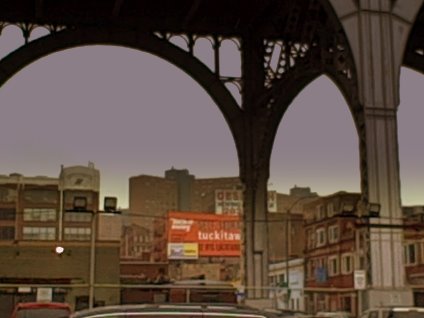
How sad we are to learn (this from The Times) that “the New York City Council cleared the way this afternoon for a 17-acre campus expansion by Columbia University, the largest in its history.” How sorry we are for Nick Sprayregen and his family, the owners of Tuck-It-Away Self-Storage, the largest private-property owners in the area who have fought this expansion so valiantly, and now will be forced to accept millions and millions of dollars from Columbia in exchange for their buildings as part of a carefully negotiated settlement in advance of an eminent domain action.
The loss is incomprehensible! To think of West Harlem without Tuck-It-Away Self-Storage is not so different than midtown without the Empire State Building! We like to remember how often we (like so many others) have emerged from the dank tunnels of the Number-One subway line headed toward the elevated platform at 125th Street, only to have our spirits lifted by the bright-orange facade of a pre-war manufacturing facility so lovingly converted into a Tuck-It-Away Self-Storage facility. And how depressing will it be to look down on an urban campus filled with students and researchers, knowing that each one of them has ripped out a tiny little piece of your heart? Does City Council have no regard for the impact of your departure on the local community? Each of your buildings must employ at least two janitors and an equal number of receptionists!
Sadly, the road ahead does indeed appear bleak for you, Tuck-It-Away Self-Storage. But take heart, your loss will not be entirely in vain: we in Washington Heights have long been engaged in the same fight against Columbia Medical’s designs on our neighborhood, which will no doubt deprive us of the bodegas, pharmacies and “phone-booth” stores that like golden threads have so long beautified and enriched the tapestry of life on Broadway and Amsterdam. (Exhibit A: the new Starbucks at 168th Street, which replaced a beloved “ladies undergarment” store.) Uptown developers and similarly minded profiteers, be warned: this ghetto is not for sale! A beacon of bright-orange hope, the eternal spirit of Tuck-It-Away Self-Storage lives on forever!
Filed under: Architecture, Gentrification, Government, New York City, The Times, Washington Heights | Leave a Comment
Tags: Columbia University, Eminent Domain, New York City Council, Tuck-It-Away Self-Storage, West Harlem
Today we heard the unfamiliar whine of a dog on the subway. Poor thing! We can imagine no environment more foreign or artificial to a dog’s sensibility than a New York City subway car, between the plastic orange seating, linoleum floors, steel poles and preposterous advertisements. (Dr. Zizmor, anyone?) Or — from a sonic perspective — the brakes, which coming into the station scream like terradactyls, or the harsh, distorted voice of the conductor over the speaker, even when it’s our favorite one, the guy who each morning welcomes us aboard the downtown A-train “experience”: none of this is cause for celebration by the poor dog, who we imagine wishes for nothing but to escape. Still, we have some reason to be jealous of this creature, knowing that it will never be possessed by such a longing — both terrible and beautiful — to invent, compose, envision, execute, fashion, formulate, improve, design, forge, modernize, overhaul, reactivate, recondition, reconstitute, refit, refurbish, rehabilitate, remodel, renew, repair, restore, resurrect, retread, revamp, revitalize, renovate and — more than anything — to destroy!
Filed under: Capitalism, Communism, Infrastructure, Longing, New York City, Subway | Leave a Comment
Tags: A-train, Dogs, Human Condition, New York City, Philosophy, Subway
Today we were both amused and disheartened to find a panoply of gay code words used in a N.Y./Region (long our favorite section) piece in The Times on Mr. William J. Dane, a curator and art scholar who has maintained the Newark Library’s collection of prints and rare books for more than six decades. To wit, we learn that Mr. Dane is “dapper and refreshingly irreverent”; that his tie “was adorned with burgundy-and-green bunches of grapes”; that he wears “a rhinestone-slathered watch that would have put Liberace to shame”; that he said, “‘Ahh, Andy,” [while] pausing at a Warhol serigraph of Jacqueline Kennedy Onassis”; and that he “has an admitted weakness for handmade artists’ books and mass-produced pop-up books, the more outrageous the better.”
Nowhere, however does the article state that the man is gay. But wait! We also learn that he served in the U.S. army during WWII, so perhaps he’s not…?
Please. Whether dictated by Mr. Dane (as is often the case with members of his downtrodden generation) or The Times — and as much as we enjoyed reading about such a charming old queen — the failure of the piece to explicitly state the obvious left us with a bittersweet aftertaste. Is it just us, or does it seem that such articles about the heterosexually inclined never fail to make explicit this fact, either by way of a reference to a spouse or a girlfriend/boyfriend of the opposite gender? On the other hand, given that The Times still uses “companion” (the term of choice for any unwed couple, gay or straight), perhaps we’re better off with the awkward, uncomfortable silence and oddly dated prose such as that used to describe Mr. Dane.
Still, there’s a part of us — the altruistic part? — that wishes Mr. Dane had owned up to it, if only for the sake of all the young queens we can so easily imagine out there perusing The Times and being left with the impression that gays exist only: 1) in the fashion/style/garden sections; 2) as crime victims; and 3) as monstrous specters used by the current political leadership (and those who would replace them) to rally the unthinking hordes to their cause. But that too would be something of a lie — and here is our most bittersweet admission — because the person we are describing, the young queen we would truly like to save, is in fact us, to the extent that we will always exist unchanged — and marked by fear and ignorance — in the memories of our past.
Filed under: Drivel, Gay, Language, The Gay Recluse, The Times | Leave a Comment
Tags: Gay Code Words, Gay Euphemisms, Stereotypes, Stilted Prose, The New York Times
On Decembers Past
With so much pressure and anticipation, this — namely, the week before Christmas — was when we could stand it no longer: it was time to mount an expedition into that most forbidden and exotic of all domestic locales, our mother’s bedroom closet. To even enter our parents’ bedroom felt dangerous; it was the one room in the house (even more than the dining room) in which we never had a good reason (or justification if it came to that) to be found alone; consequently we knew that any transgression would be viewed with strict scrutiny and so — even though our mother had gone out — tried to walk as quietly as possible.
The door of the closet, when we finally made it there, opened easily but with an ominous rustle as it scraped across the wall-to-wall carpet, a sound that might have deterred us if the door was not at this point completely open. Any thought of turning back now jettisoned, we stepped in and allowed our eyes to adjust to the dim space; we pushed aside the rows and rows of long dresses and heavy wool coats that lived there in perennial languor and paused to consider several towers of precariously stacked hat and shoe boxes we knew would have to moved to achieve our ultimate goal: the location and nature of our unwrapped Christmas presents.
While there was a part of us that wanted to continue as stealthily as possible in order not to leave any trace of this treachery, this was certainly not the full story, for why else would we have so carelessly rearranged the boxes except for an unacknowledged desire — the same one possessed by so many criminals — to be caught? In fact, after we “accidentally” knocked over one of these towers, it made it even more exhilarating to see the boxes strewn about, and made our heart beat all the faster as we arrived at the deepest depths of the closet and uncovered our lost treasures in the sand, the toys and games and books! (Thankfully, our mother did not buy us clothes at Christmas.)
Hardly noting the passage of time — already, our mother was due back at any moment — we sat there entranced, tracing our fingers over each item, whispering brand names and titles, savoring how good it would feel to fully possess such bounty in just a few days. (This did not completely eliminate the suspense, given that we were not always sure which present would be given to us and which to our siblings until Christmas morning; more than once we watched someone open a present with a pang of jealousy made all the more intense by our guilt.)
Did our mother know that we had done this? If so, it was never discussed, even after the time we — again, “accidentally” — blurted out the identity of a gift before we were given the opportunity to open it on Christmas Eve. When we consider this now, it seems obvious that our mother was far too focused on staging what (with all respect) was a very complicated production to acknowledge the shifting arrangement of boxes in her closet or to allow the feigned surprise of her children as they opened gifts to outweigh the somewhat perfunctory (if cheerful) displays of enthusiasm and gratitude.
As with so many facets of our family (and our country), we can only ask one question: how did she do it? This year, with the facade of such a life long ago (thankfully) shattered, we find ourselves considering Christmas with a smaller but more honest sense of pleasure: we hope to spend the day asleep, just as we like to imagine our mother now that she has finished her work.
Filed under: Capitalism, Communism, Memory, The Gay Recluse | Leave a Comment
Tags: Bedroom Closet, Christmas, Family, Gifts, Pittsburgh, Transgression
On the Beauty of Extreme Weather
What? Only two inches of slush? That’s not a storm! It’s a transition, a pause, a hiccup and (most of all, after all the buildup) a disappointment. But seriously, do you remember the time — we were still in school then, so it would have been at least 100 years ago — when it snowed for days and days, so that we forgot what cars (and for that matter, streets and sidewalks) looked like because they were all buried? Of course the economy suffered and threatened to send us all into a deep malaise — snow is so inefficient — but it somehow calmed us down to see people in snowshoes and cross-country skis, or just walking ten feet above their former and future daily lives. Or maybe it was just the magical silence that descends upon the city after such a storm, so that for once everyone seems to be talking in whispers. In any case we were happy for a few hours and knew it; perhaps it’s the ephemeral nature of snow, obvious to us even then, that made us so appreciative.
But even better than the storm itself, if you remember, was how we hiked into the middle of the park and unexpectedly (because we were completely alone) saw the woman in the white coat. The coat was quilted and puffy — presumably filled with down — but full-length and then some, so that her boots (also white) could barely be seen poking out from under the hem, while seven or eight feet up (she was that tall), her head was covered by a big white hood. It was one of the most preposterous, impractical things we could have imagined and yet — in the context of this most extreme winter storm — so perfect and beautiful, and we will never forget how the coat camouflaged her against the arctic tundra in which we suddenly found ourselves, and how she moved very slowly but deliberately — with tranquility, even — across the grainy, snow-pelted landscape. It was really an act of theater, and you may disagree, but we will always feel comforted by the idea that before she disappeared over the hill, she turned her face in our direction and knew that the greatest moment of her life (and one for which she had obviously prepared) had been witnessed.
Filed under: Landscape, Memory, New York City, Pleasure, Weather | Leave a Comment
Tags: Down Jacket, Snow, The Great White Hurricane, Winter
In yesterday’s Times, we were told that Italy has sunk to new depths of despair on many fronts, “struggling as few other countries do with fractured politics, uneven growth, organized crime and a tenuous sense of nationhood.” There is widespread malaise, or malessere. Quoted is Walter Veltroni, the mayor of Rome: “It’s a country that has lost a little of its will for the future.” From Luisa Corrado, an Italian economist, we learn that Italians are the least “happy” of 15 Western European nations and do not trust either the world around them or even their own government. Moreover, the elderly are as pervasive as brilliant young entrepreneurs are scarce, and most shocking of all: there is no Italian Google (or at least a homegrown version of a world-dominating internet startup). “We can’t imagine in Italy that a 30-year-old opens a business in a garage,” says Mario Adinolfi, before elaborating: “In every country young people hope. Here in Italy there is no hope anymore.”
Yet we hear nothing of Turin, where we spent a week and didn’t see a single tourist, American or otherwise. True, it was the opposite of ethnically diverse — but compared to New York, what city isn’t? — and while we didn’t have to be convinced that it’s a culture suspicious of outsiders, it is still a city of millions, and are they all so miserable? Do you remember the afternoons we spent walking along the river, admiring the willows and atlas cedars, intoxicated by the scents of spring? Needless to say, we were hardly alone in our enjoyment of these pleasures, and we (who are always looking for the signs) did not note any particular “unhappiness” or despair among the people we saw, except that which marks the inhabitants of all cities, where we all at one time or another must confront our demons of existence.
And were they all so old? Perhaps, but we remember the tight jeans and 1980s haircuts seen in the parade of local teenagers who congregated under the porticoes one Sunday afternoon, and the clumps of screaming children who were released from jail school (and how we crossed the street to avoid them.) And people aside, let’s not forget the architecture! Downtown was exquisitely beautiful (except for the neon remnants of the recent Olympics), filled with apartment palaces dating from a gilded era centuries past and now being widely restored to residential dignity (and in many cases splendor). Yes, the hours of commerce were erratic — don’t they realize they’re losing money? — but who can deny the quality — and the timeless resonance — of the Piedmont cuisine? And is this food not flavored with the same obstinate refusal to adhere to American capitalism that has supposedly lowered the GNP and led to widespread doubt? If so, honestly, we would appreciate a little more of it here, just to counter the pervasive swaths of chain restaurants and sprawl that have fueled our rise to “prosperity.”
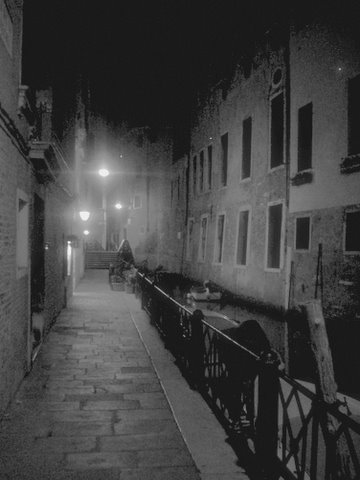
Or what about Venice, which according to the Times article is “the most beautiful of cities, but [one] whose domination of trade with the Near East died with no culminating event [and is now] essentially an exquisite corpse, trampled over by millions of tourists”? We remember those oddly familiar and somewhat noxious streets, the ones that are not peculiar to Venice but can now be found near cathedrals and towers everywhere (as well as Times Square), all lined with the same luxury-good retailers and — outside — counterfeit goods laid out on tarps that can be swept up in an instant if the police arrive. But that’s not the only story in Venice! It wasn’t so difficult to escape the hordes; just a few turns and we found ourselves in a maze of alleys, bridges and canals that by New York standards were enchantingly desolate, lined with decaying walls that for hundreds of years have already been crumbling into the sea. Or what about the Danieli, where we ate lunch, an expensive and greedy decision we made (twice) because we knew that nothing else would satisfy our desire to watch over the harbor boats with the same eyes as Richard Wagner, Henry James and so many other dead heroes?
Is it so horrible to be mired in the past we never knew, when the only certainties offered by the future are longing and disappointment? We ask: has there ever been a worse time to be alive than now? It’s always a legitimate question, no matter where you live! As we consider all of this — the article, our memories, the creep of nostalgia for anywhere but here and now — we are struck by the certainty that, statistics aside, nobody is unhappier than Americans but — and here’s the problem — more unwilling to admit it. Italy may be “behind” us in narrow economic indices, but to visit such a place is to understand that in terms of empires, it is a land of truth, filled with vistas we will one day call our own.
Filed under: Capitalism, Decay, History, Nostalgia, Resignation, The Gay Recluse, Travel | Leave a Comment
Tags: Economy, GNP, Italy, Schopenhauer, The New York Times, Turin, Venice
On the Pleasure of Ruins
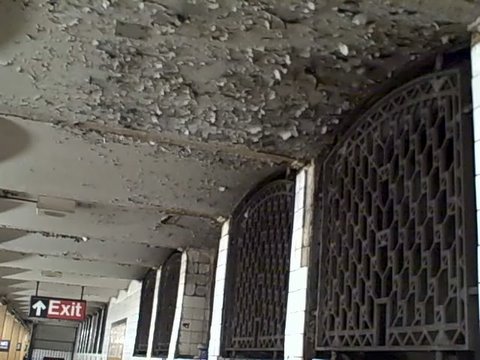
We read about the MTA’s proposal to raise subway fares with mixed feelings; on one hand, we would happily pay the extra five or six dollars a month for more frequent trains, but at the same time, as we consider the ruined state of our subway station — regularly cited as one of the dirtiest and most poorly maintained in the entire system — it occurs to us that (however unlikely) the MTA might allocate the necessary funds to renovate, and this idea does not please us at all. Undoubtedly they would strip out the beautiful art-deco grates that we like to contemplate each morning as we wait for the C-train to arrive; or perhaps they would do away with the neglected advertising spaces, where a thousand layers of paint and glue offer a gateway to another era. Here it seems appropriate to pause and consider a quote from Péter Nádas, whose Book of Memories we have been slowly ingesting (and yes, for the record, it is extremely “gay” in the best sense); discussing the encroachment of high-rises on the last forested area of the city in which he grew up, he writes: “I do not regret the loss; there’s nothing in the world with which I have a more intimate relationship than ruination; I am the chronicler of my own ruination; even now, when making public the destruction of the forest, I’m recounting the history of our own destruction.” Though our situations are not exactly analogous, here Nádas provides us with a key to understanding our relationship to the Washington Heights — the decaying buildings; the pervasive, inescapable sense of grief and loss; and yes, even the corroding subway station! — which we cannot view except in the context of our own lives, i.e., the equally spectacular ruins that mark any true landscape of dream and memory.
Filed under: Architecture, Decay, Gay, Infrastructure, Literature, New York City, Subway, Washington Heights, Writers-Hungarian | Leave a Comment
Tags: Art Deco, Book of Memories, Fare Hike, MTA, Peter Nadas, Subway
Have we ever told you just how grateful we are to the Audubon Station Post Office in Washington Heights? They have taught us so much, and not just about patience and resolve when it comes to standing in the six-hour lines that perpetually meander through their sallow, fluorescent interiors, but about the need to resign ourselves to the inherent uncertainty of modern life. Why would we want to live in a gentrified neighborhood or — god forbid — the suburbs, when here in Washington Heights we can experience the almost daily exhilaration that comes from knowing that only fifty percent of the mail addressed to us can ever be expected to end up in our hands? (Tax season is particularly — no, deliciously! — excruciating in this regard.) Others might complain about their demonstrated failure to ever deliver packages, much less leave notices, but to these misguided souls we ask: where else could we better learn such important lessons with regard to own futility; our inability to change a single thing; our essential powerlessness to make clear the truth to those so unwilling to hear? Where else can we be so sternly reminded that in this business of life, the customer is always (at least eventually) wrong? In short, nowhere but the Audubon Station branch of the United States Postal Service in Washington Heights! Hardly a day passes when we do not thank them for imparting to us these invaluable insights, which are so critical to a life of reclusive, pessimistic bliss!

Filed under: Capitalism, Gentrification, Infrastructure, New York City, Pessimism, The Gay Recluse, Washington Heights, Writers-American | Leave a Comment
Tags: Audubun Station, Mail, Thomas Pynchon, Thurn und Taxis, Trystero, United States Postal Service, USPS, Washington Heights
As anyone who has read Cormac McCarthy knows, the best (which is to say, the truest) stories of the American West — although like pretty much anywhere, once you peel back enough layers — are filled with unfathomable extremes of violence and oppression; this was more than confirmed for us recently when we read (as part of our continuing examination of the gay voice in American literature) Tom Spanbauer’s 1991 novel The Man Who Fell in Love with the Moon. The book, narrated by a boy who may or may not be of Indian (i.e., Native American) descent but who in any case grows up working in a brothel in late 1800s Idaho (where his customers are mostly but not exclusively men), is beautifully written in a sparse, literate prose that, like McCarthy’s work, clearly falls into an American tradition of slightly clenched teeth narration with a decidedly rural accent. Without unveiling the details of the story, we can say it is one that (while filled with unpretentious humor) you can only read with a pit in your stomach, knowing that it will not end well for the boy (named “Shed”) and his “family” from the brothel, an assortment of whores and outcasts who have carved out an increasingly tenuous existence in which to conduct their business away from the oversight of the town’s Mormon leaders. In the end, Spanbauer gives us not only the expected killing and raping in the most graphic (which is not to say inappropriate) manner possible, but also a telling picture of the lengths the Mormons (like all of our favorite religions) will go to crush anyone who a) exists outside the confines of their moral strictures, or b) interferes with the economic exploitation of the land in which they have settled. In short, there is no reason — except for the most obvious (i.e., gay) one, although it’s not a word that exists in the book itself — that Spanbauer’s The Man Who Fell in Love with the Moon should not be regularly mentioned in the same breath as McCarthy’s Blood Meridian as an example of the unbearably sad truth upon which so much of our country was built, the ramifications of which — as we saw yesterday in Colorado, almost as if it were an epilogue to the book we had just finished — can be expected to reverberate into the foreseeable future.
Filed under: Gay, History, Literature, Pessimism, Writers-American | Leave a Comment
Tags: Colorado Springs, Cormac McCarthy, Matthew Murray, Mormons, New Life Church, Tom Spanbauer
To the brave soul who trapped a mouse in a gluetrap and left it in the hallway, bravo! We would like to commend you for digging so deep and summoning the courage to carry such a ferocious beast — did you use your bare hands? — to the elevator, where we and countless others were able to witness its writhing terror and agony. How our veins pulsed with righteous justice with each piteous cry of that pathetic, despicable monster! We hope that you won’t be too disturbed to learn that we — lacking your noble courage and compassion — could not resist the impulse to put this hellish creature out of its misery, sending it to the very oblivion you are so right to fear.
Filed under: Government, History, Philosophers, Resignation, Washington Heights | Leave a Comment
Tags: Compassion, Courage, George W. Bush, GOP, Karma, Mice, Mouse, Schopenhauer
On The Weekend
Once again with a thought to dip into the backlist of American fiction written in a “gay voice,” we turn our attention to The Weekend, Peter Cameron’s deceptively bitter 1994 novel about two couples — one straight and one gay — who spend a weekend at the straight couple’s house in upstate New York. This unlikely scenario comes about by way of the dead lover of one of the gay men, who (i.e., the dead lover) is also the brother of the husband in question. There is much to admire about this book, beginning with the small trim size — it’s barely bigger than a CD — which (at least at first) makes it feel like you’re settling in with the libretto to one of your favorite operas. More important — and far more astounding from a technical standpoint — is the juxtaposition of Cameron’s careful prose, literary and reserved, with his characters, all of whom are miserable in the worst sense of the word (which is to say insufferable and completely unaware). First you have Lyle, the surviving half of the original gay couple, a pretentious art critic who likes to make shallow proclamations about this or that art form being “dead”; his date for the weekend is a young painter who despite his annoying aimlessness is perhaps the most forgivable of the lot, given the rotten treatment he receives at the hands of the husband and wife, who are clearly perturbed to see Lyle romantically involved with anyone not the husband’s dead brother. The husband spends all of his time in the garden for reasons that are not entirely clear until we are introduced to the wife, one of those desperate, neurotic souls who lives a fantasy (attractive, faithful husband; house in the country; money to spare; cute child; morning swims in the nearby river) but seems nothing but unhappy about it. As we read, we become increasingly agitated: why spend even ten seconds with these weak and unimaginative people? But on the verge of throwing the book out the window (and it is the perfect size for throwing), we realize that we have already finished it and thus end up feeling oddly grateful to Cameron for subjecting us to the vacuous world as it so often exists. These people, we realize, are like so many from our past, and we are astonished (and frankly exhausted) to have known such shallow souls (and to have been subjected to their petty tyrannies), so in the end, we feel nothing but relieved to have left them behind.
Filed under: Literature, The Gay Recluse, Writers-American | Leave a Comment
Tags: Gay Literature, Gay Writers, Peter Cameron, The Weekend
On Memories of Paris
Perhaps it was the broken signal of the closing subway door — so that the usual New York City tones were reversed, with the low one first — that dislodged us from our usual evening commute and sent us reeling toward the city of light; or maybe it was the pair of women speaking French; and who but a Parisian woman would have worn that wide black headband made of the same dull rubbery material as her coat? Even her long nose and small, constantly pursed lips made us remember the legions of similarly composed women we encountered each day during our years in Paris. Back then — as we did this evening — we always stood next to them on the metro to eavesdrop on their mundane but magical conversations (at least for a little while, until the novelty — as it always does — wore off).
Then there was the letter we received this afternoon from R____, our old friend from Paris. We’ll always remember how young and brash she was in those days; how athletic and blond and gregarious, a perfect example of that certain type of American girl who drives the French crazy not only by saying exactly what she thinks, but by doing it in an accent perfected in the usual way. And what were we, besides being jealous of both her accent and her men? Our official stance was to be oblivious and distracted, as if we had too many verbs to conjugate to consider girlish questions of love and sex; secretly of course we were infatuated with the art-history professor, and spent months failing to drum up the courage to say hello to him, even the time when we saw him par hazard in a bookstore near the Place St. Michel. How we trembled, watching him through the storefront, rehearsing some question about Dubuffet and praying that he would somehow detect us from our hidden spot across the street! Then, purchase in hand, he left the store and briskly walked away into his Parisian life, leaving us with no choice but to trudge home hand-in-hand with our old friends cowardice and despair.
It was an act that may have fooled some people, but not R____ : typical was the time we were riding one of the long escalators on the metro and she considered us with her marble gray eyes: “Mon chere, why is that more men seem to stare at you than women?” This we met with a shrug of indifference; how were we supposed to know? Thankfully we can now respond with more honesty; in our memories we now shower them all with kisses, knowing that if one or two might quicken our pulse, nobody is any longer in a position to break our heart.
Filed under: Drag Queens, Gay, Memory, New York City, Subway, The Gay Recluse, Travel | Leave a Comment
Tags: Chatelet, Dubuffet, Les Halles, Metro, MTA, Paris, Place St. Michel
On the Blue Atlas Cedar in Snow
The first snow of the season in our Washington Heights garden, and naturally we are drawn to that most unnatural of colors: the electric slate blue of the atlas cedar (Cedrus atlantica). Suddenly — are you with us? — we are on a train in northern Italy, watching the countryside drift past; here, it seems that even the ugliest post-war architecture is redeemed by the presence of such imperial trees, which if given the chance will grace us all without any mark of class or religion.
Music: “Buried Ships” courtesy of Saturnine, Mid the Green Fields (VictoriaLandRecords 1998).
Filed under: Communism, Landscape, The Gay Recluse, The Russian Blue, The Winter Garden, Travel, Washington Heights | Leave a Comment
Tags: Blue Atlas Cedar, Cedrus atlantica, Columnar, Fastigiata, Saturnine, Snow, Turin, Venice


 The Gay Recluse