In which The Gay Recluse becomes increasingly obsessed with naps.

Lately we’ve had trouble sleeping, so have begun to rely on naps.
Sometimes the best place to sleep is on a crowded subway train. (If you can get a seat!)
Especially on the A or D between 59th and 125th Streets, a trip that during rush hour can last as long as five or six hours.
Today we were sitting next to these two teenage girls. The whole trip they were happily screaming to each other about something.
Needless to say, it was not Virginia Woolf!
But we didn’t care. The stop-and-start motion of the train lulled us to sleep.
And soon they and everyone else seemed far away.
Filed under: Capitalism, Conspiracy, GWB Project, Health, Longing, Subway | Leave a Comment
Tags: Naps, Teenagers, The D-Train, The George Washington Bridge, The MTA
In which The Gay Recluse wonders when the fog will burn off.
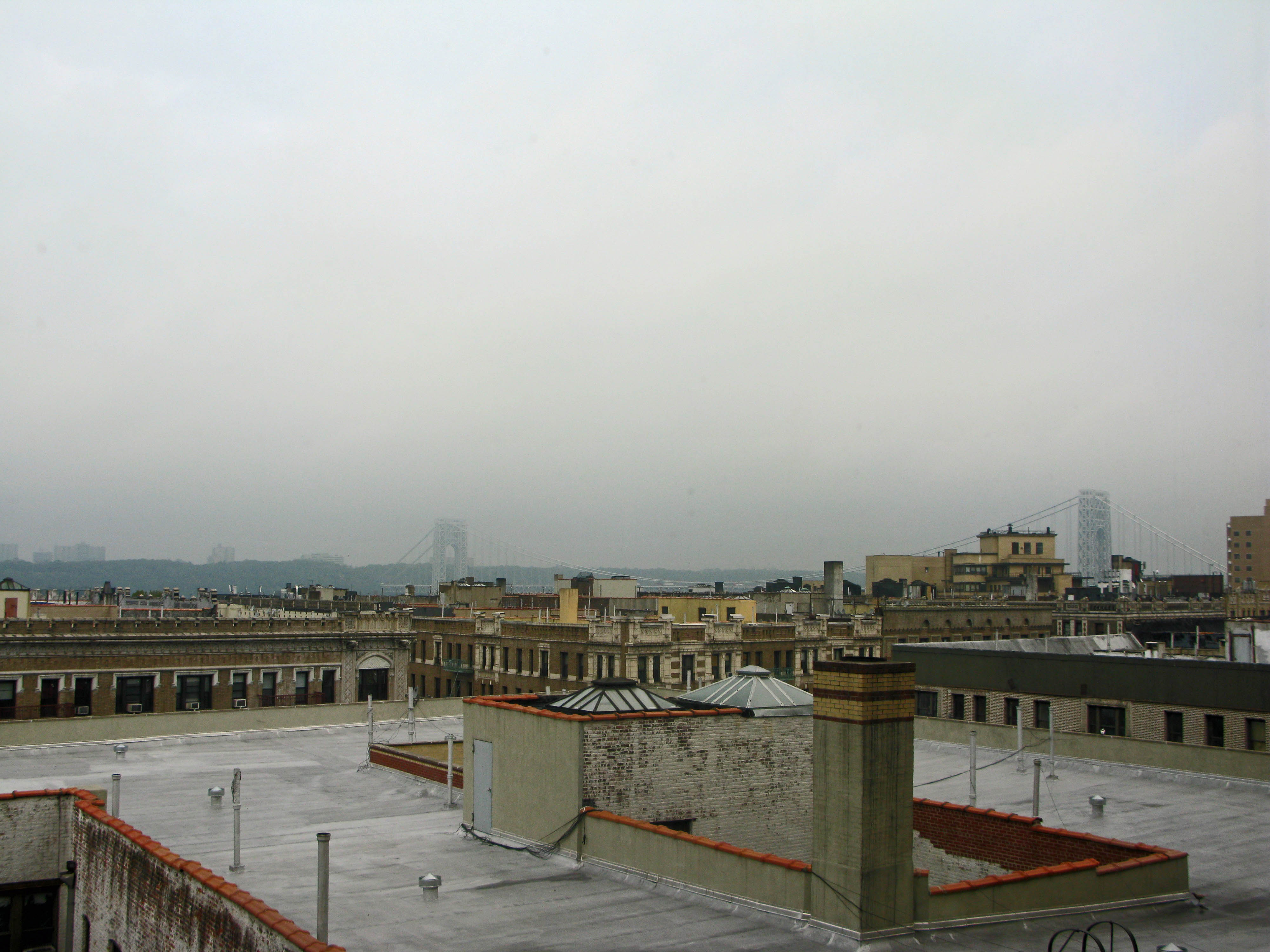
Lately it seems that every morning we wake up in a fog.
And we feel sort of hopeless, because even though logic dictates otherwise, we wonder if this will be the day that the fog is permanent.
And we’ll never see the sky again. Or the sun or the moon or the stars.
Or anything resembling a gain in our 401(k). Lol.
It’s easy to become despondent when the future is so uncertain.
Until we remember other periods of our life, when it was so much more certain.
And how we were even more unhappy then than we are now.
Filed under: Architecture, Gay, Government, GWB Project, History, New York City, Nostalgia | Leave a Comment
Tags: 401(k), Depression, Fog, Recession, The George Washington Bridge
In which Dante and Zephyr take over The Gay Recluse.
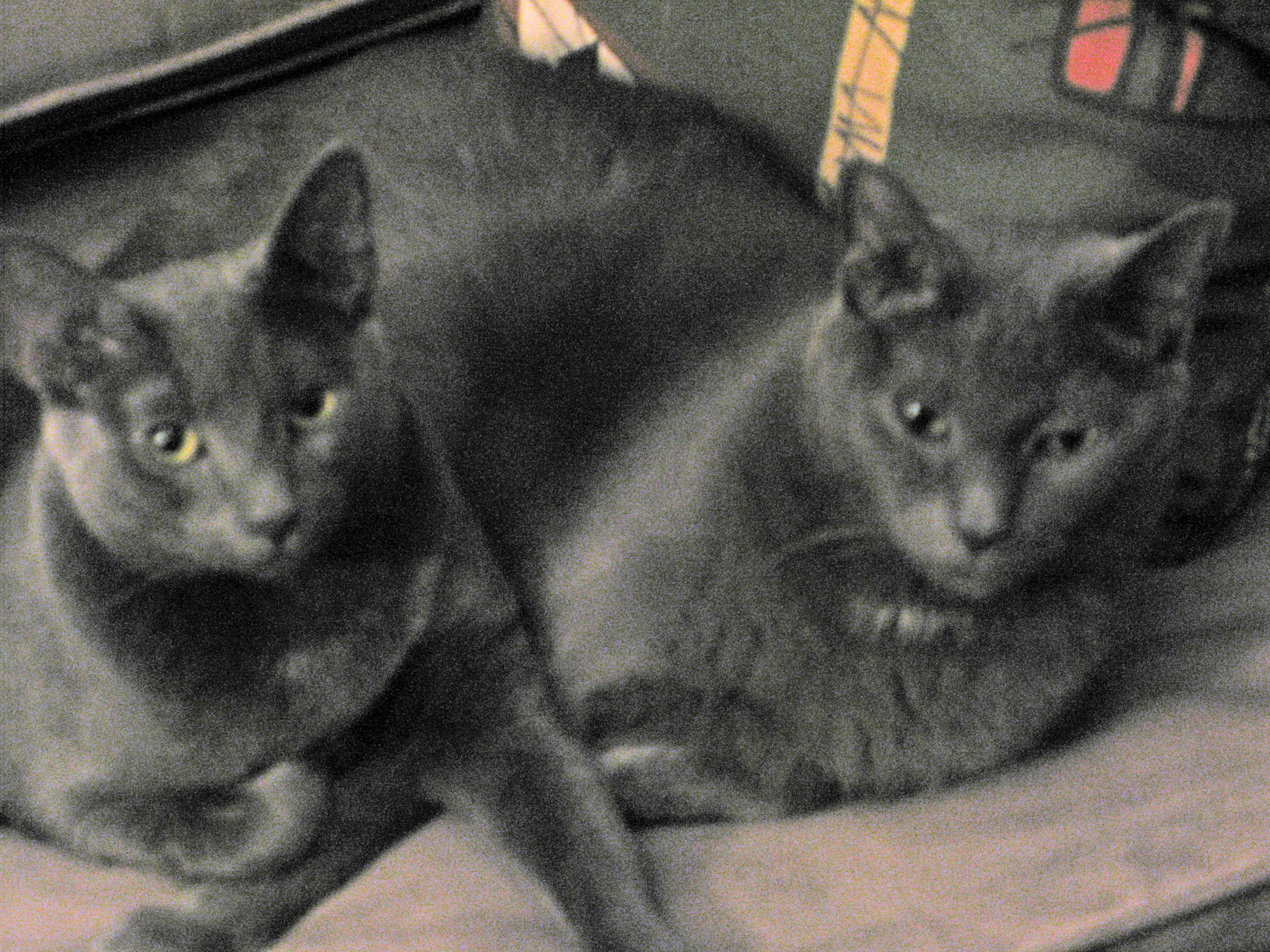
Friends! Did you watch the debate last night?

Did you not hear the loathsome John McCain utter the usual lie, in which he claims that every cat is a lolcat?
Rest assured, we are voting for Barack Obama.
Not every cat is a lolcat!
Filed under: Animals, Not Every Cat a Lolcat, Politicians, The Russian Blue | Leave a Comment
Tags: Barack Obama, Dante, Debates, John McCain, Not Every Cat a Lolcat, Zephyr
In which The Gay Recluse becomes increasingly obsessed with birds.
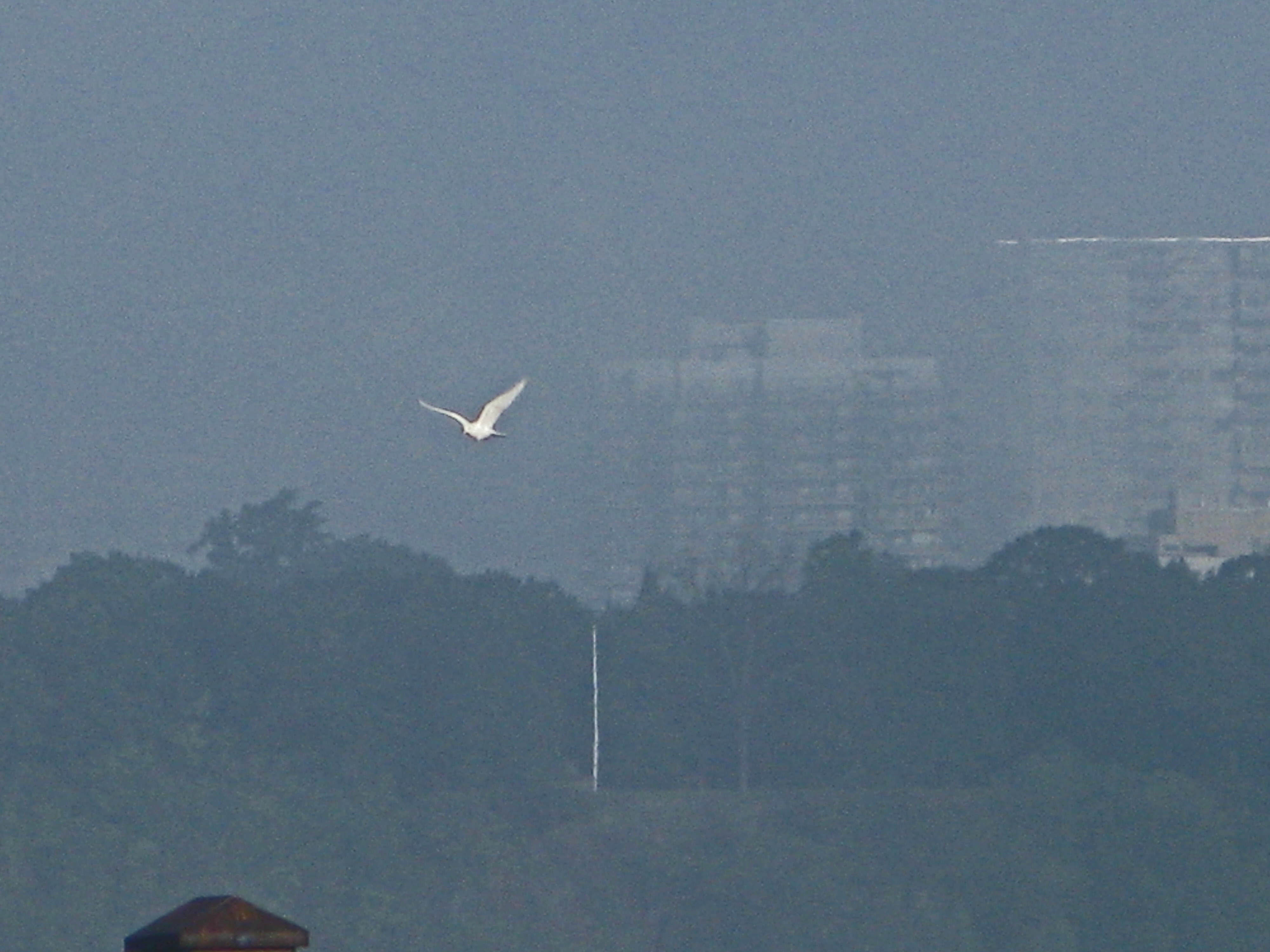
One thing about birds.
No matter how disgusting and dirty they look walking around on the ground — especially pigeons — they are always beautiful in the air.
Sometimes at the gym — which is on the third floor — we blow off our workout in favor of watching the flocks of pigeons fly through the canyons.
They look like schools of fish, turning en masse in a fraction of a second above the heads of the oblivious pedestrians. Sometimes they’ll even reflect a shaft of sunlight.
And for a second, they seem happy to be alive.
Filed under: Animals, Architecture, GWB Project, Health, Longing, Weather | Leave a Comment
Tags: Birds, Fish, Pigeons, Seagulls, Workouts, Zoning Out
On The Metropolis Case
In which Matthew Gallaway aka your local gay recluse gets a book deal.
Eight or nine years ago, we decided to write a novel.

It was actually our second attempt; the first one — a satirical look at internet start-up culture in the late 90s — we had retired to the desk drawer after sending it around without much luck.
This new one was more ambitious: it was rooted in Wagnerian opera, Lou Reedian post-punk, the philosophy of Schopenhauer, Jungian psychology, the life and death of cities, French aestheticism, the magic of memory, gay identity and — most importantly? — cats. It srsly took forever to write!
And when it was done, it was literally 1000 pages long.
We sent out some queries and a few people expressed interest. But everyone was like: “Hey, what century do you think you’re living in? Good luck selling a 1000-page novel about opera and philosophy and French aestheticism!”
Whatevs. We started this blog and tried not to think about it too much until someone kindly suggested we send a blind query to a “big-concept” agent, which we did.
And he wrote back! And not only that, he helped us streamline the story, so that it actually held together (or so we hope) instead of drifting off into so many theoretical tangentzzzzzz.
These revisions took the better part of a year, but the resulting novel was at least 1,000,000 (one million) times better than the original version.
And then — just like that — he sold it!
Given the choice between a few smaller “literary” houses and a gigantic, multinational conglomerate, we went for the latter. Ha — we sold out!
But not really, because the editor really loves the book, and so does the publisher. Here’s how cool our editor is: she just bought a memoir by Belinda Carlisle (yes, of the Go-Gos!) and she also acquired the NA rights for Girl in a Blue Dress by Gaynor Arnold, which was nominated for the 2008 Man Booker Prize. (So take that, literary cred!)
Of course there will be more revisions and editing, but we’re looking forward to it. We’ll obvs keep you posted as things progress.
But right now it feels like more of a dream. We ask how this could be happening, when the odds were so long.
There’s also an irrational fear that it will all fall apart.
But for now, it’s on.
We read about it this morning in Publisher’s Marketplace, as if we were reading about someone else.
Oxford University Press editor Matthew Gallaway’s THE METROPOLIS CASE, the sweeping tale of an unlikely quartet, bound together by the strange, spectacular history of Richard Wagner’s masterpiece opera, Tristan and Isolde, to Suzanne O’Neill at Crown, by Bill Clegg at William Morris Agency (NA).
Filed under: Animals, Capitalism, Dissonance, Dream, Faith, Infrastructure, Landscape, Language, Literature, Weather, Writers-American | 15 Comments
Tags: Agents, Book Deals, Editors, Matt Gallaway, Matthew Gallaway, The Metropolis Case
In which The Gay Recluse becomes increasingly obsessed with the firethorn.

Orange is one of the best colors in the autumn garden.

It will have to sustain us through the winter.

Fortunately, we never get tired of looking at it.
Today as we contemplated the clusters of tiny fruit, illuminated by the eastern sun, we remembered how as a child we used to play under a tree — in our memories, at least, the bark was silver and peeling, like a birch — which like the firethorn possessed similar berries that we used to collect in a bucket and give to our mother, knowing that orange was her favorite color. One day, however, we came home from school and were dismayed to find the tree gone — we now suspect it was a mountain ash (sorbus aucuporia) — in its place only a stump, some flecks of sawdust and a few scattered berries in the lawn. We gathered up the last of these and presented them to our mother who, with tears in her eyes, explained that the tree had been diseased — you could see the vein of rot even in the stump — and had to be cut down; only later would I understand her reluctance to ever replace it with a new one.
— The Gay Recluse, September 30, 2007
Filed under: GWB Project, Memory, Nostalgia, Obsession, Pleasure, The Autumn Garden | Leave a Comment
Tags: Colors, Firethorn, Mountain Ash, orange, Sadness
In which The Gay Recluse remembers his grandparents.

Of our four grandparents, the only one we knew at all was our grandmother.
And even she died when we were very young.
Our evil uncle stole almost everything she owned, but our father managed to keep a few things, including this blue vase, which he in turn gave to us.
Sometimes we wonder about her life, and wish that we knew more.
She was raised in an orphanage in Quebec, but somehow made it to Boston, where she met our grandfather. He was not an educated man but worked his way from the mail-room to an executive position in a pretty big corporation; this of course was a long time ago, before the United States became an aristocracy!
Less heroically, he was an alcoholic and a gambler and a womanizer.
And a racist and an anti-Semite! (In short, a McCain Nixon supporter.)
We can remember him swearing at the television during the Watergate trials. By then he was an old man, hacking and wheezing.
There was much speculation that our grandmother was happy when he finally died. (It’s safe to say that not many tears were shed at his funeral.)
But as so often happens, our grandmother was also an alcoholic by that point. And a racist and an anti-Semite. It was as if he had rubbed off on her after so many years of marriage.
Yet she was not such a horrible person — or so we like to believe — at least compared to her husband. She had closets filled with fabulous dresses going all the way back to the twenties! She spoke French to the waiters in Miami. She had the most wonderful pillows strewn everywhere in her Ft. Lauderdale house. She collected blue glass. And she loved chameleons!
All that’s left of her now — at least for us — is this blue vase.
As the sun streams though, it seems to cleanse her of her most serious flaws. We imagine a poor girl arriving in Boston, with little choice but to latch on to the brutish yet charismatic man who was our grandfather. Today it might have happened differently; there’s no reason to think she ever really wanted to get married or have children.
As time passes, we remember the mysterious qualities of her life, and think of her as filled with a sense of longing and sadness that — like her blue vase — was somehow passed to us.
Filed under: Addiction, Animals, History, Longing, Memory, Small Pleasure Project, Stereotypes | 2 Comments
Tags: Blue Vase, Chameleons, Drunks, Ft. Lauderdale, Grandfathers, Grandmothers, McCain, Nixon, Republican Assholes
On Dreams of Flowers
In which The Gay Recluse becomes increasingly obsessed with dreams.

The years passed, and not always quickly.

Many nights we dreamed of roses.

When they finally arrived, we could not believe our luck!
Then a question: what will we dream of now?
Filed under: Dissonance, Dream, Longing, Memory, The Autumn Garden | Leave a Comment
Tags: Dreams, Flowers, Rosed
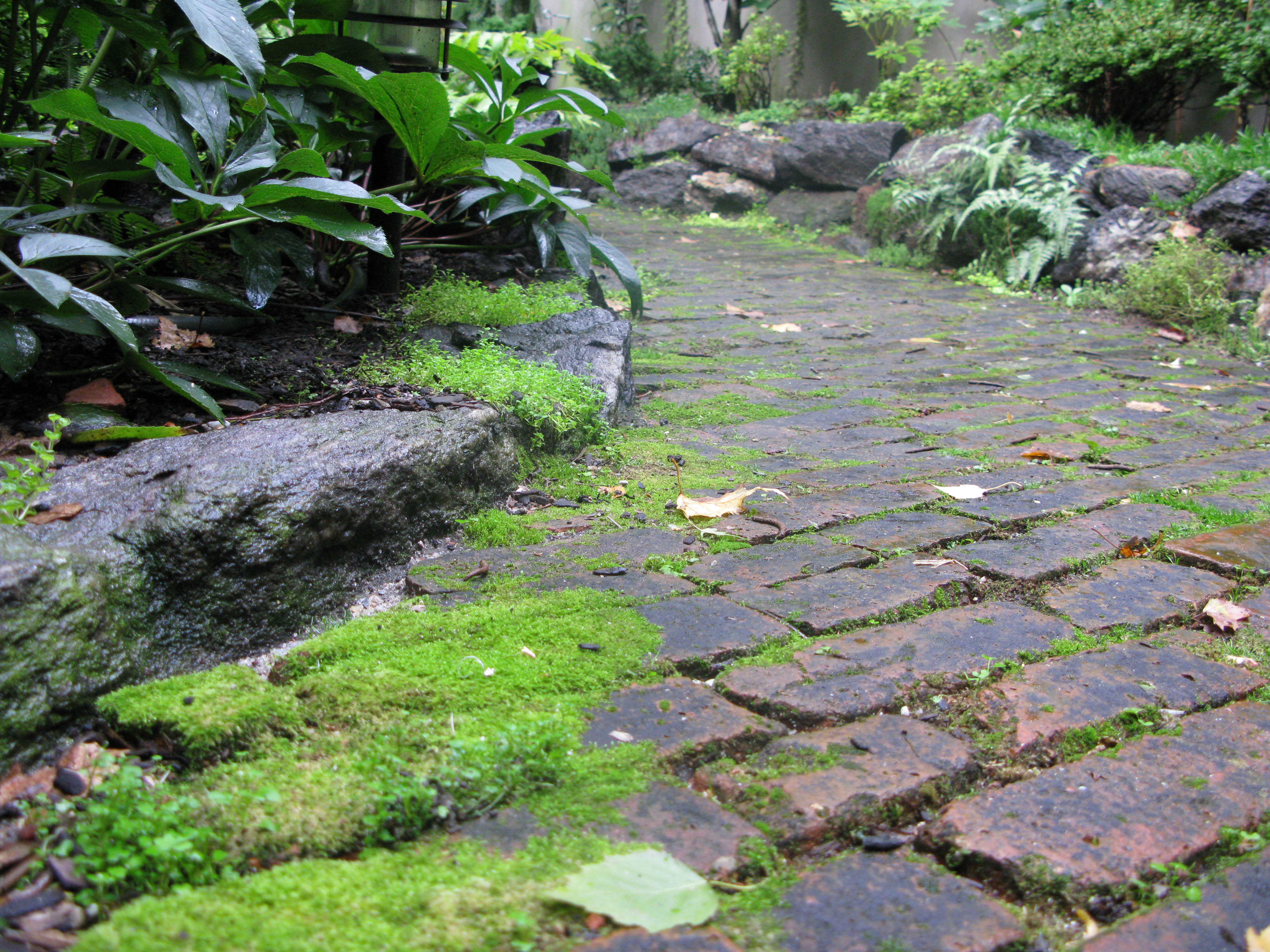
In which The Gay Recluse becomes increasingly obsessed with bricks.
According to CNN, both candidates “exceeded expectations.” (That’s a relief, in a way.)
But mostly, it makes us remember when we ran for vice-president of our junior high school.
And how we wrote a speech and delivered it very earnestly. Who knows what we said: probably some bullshit about improving communications between seventh and eighth graders.
Our opponent made a few jokes about how bad the food was in the cafeteria, which made everyone laugh.
Needless to say, he won the race in a landslide.
The question in this election is whether Americans will vote like adults or junior-high-school students.
And whether it will matter in twenty-five years when we look back at it.
Filed under: Competitions, Memory, The Autumn Garden | Leave a Comment
Tags: Bricks, Elections, Junior High, Moss, Vice President
In which The Gay Recluse confronts the reality of the past through the eyes of the present.

We recently found out that one of our nephews was having “trouble” at college.
One day he woke up and realized that he couldn’t get out of bed.

So he stayed there for a week, until someone called his parents and they brought him home.
He’s on some kind of medication now and is doing better. He’s headed back to school this weekend.
On the phone, he described what it was like to have his thoughts racing at like 1000 miles per hour, unable to concentrate on anything and — oddly — physically incapacitated.
There’s a tendency to romanticize life at college once you’ve left it so far behind.
We think: how hard could it be to read books, get wasted with some frequency and hang out on Facebook with your friends.
But at the same time, we think of our nephew, who has always been “a good kid” — smart and charismatic, popular yet independent — and how life seemed to mysteriously sneak up on him and crush him when he was least expecting it.
In a way, we think he’s lucky to confront this sort of thing now, when he’s so young.
Instead of waiting ten or fifteen or twenty more years. (The way we did.)
The truth is, you really have to hate life before you can love it.
And just to admit this can make things seem a lot better.
Filed under: Health, Memory, Sickness, The Autumn Garden, The Gay Recluse | 2 Comments
Tags: College, Depression, Fuscia, Hate, Life, Love, Partying, Troubles
On the Corsican Mint Project
In which The Gay Recluse becomes increasingly obsessed with Corsican mint.
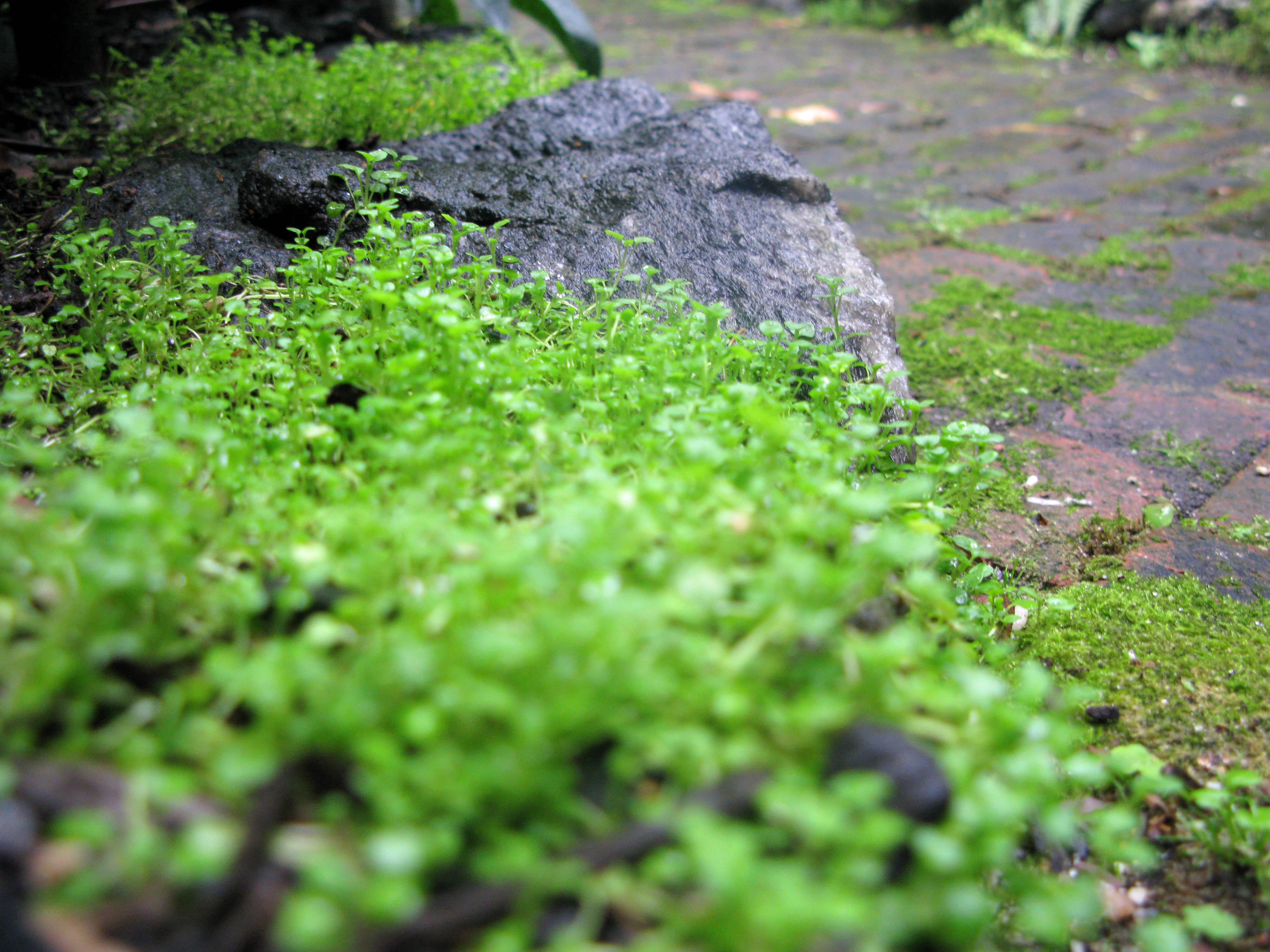
This was just a few days ago: politics aside, it’s been another good season for Corsican mint!
Of all the groundcovers we introduced into the garden, Corsican mint (Mentha requienii) has attained a particular affection for us. Although it has thrived in several places in the garden, it is most spectacular in the crevices of our stone wall, where it seems to have grown with a true sense of purpose and deliberation, a quality so often lacking in less disciplined plants (and you know who you are!). Its translucent lime leaves provide a beautiful contrast to the darker hues of the surrounding stone — a warm gray — the deep greens and silvers of the conifers and the burned reds of the brick path. Our only fear is that with a hardiness level of Zone 7, it may not survive the New York City winter; but we will not think of that now, and instead imagine a spring marked by tiny fields of Corsican mint, and the even more microscopic blooms that will hover above it like infinite stars on a clear night.
The Gay Recluse, September 2007
Filed under: Pleasure, The Autumn Garden, The Gay Recluse | 3 Comments
Tags: Bricks, Corsican Mint, Gardens, Moss
In which The Gay Recluse becomes increasingly obsessed with the George Washington Bridge.
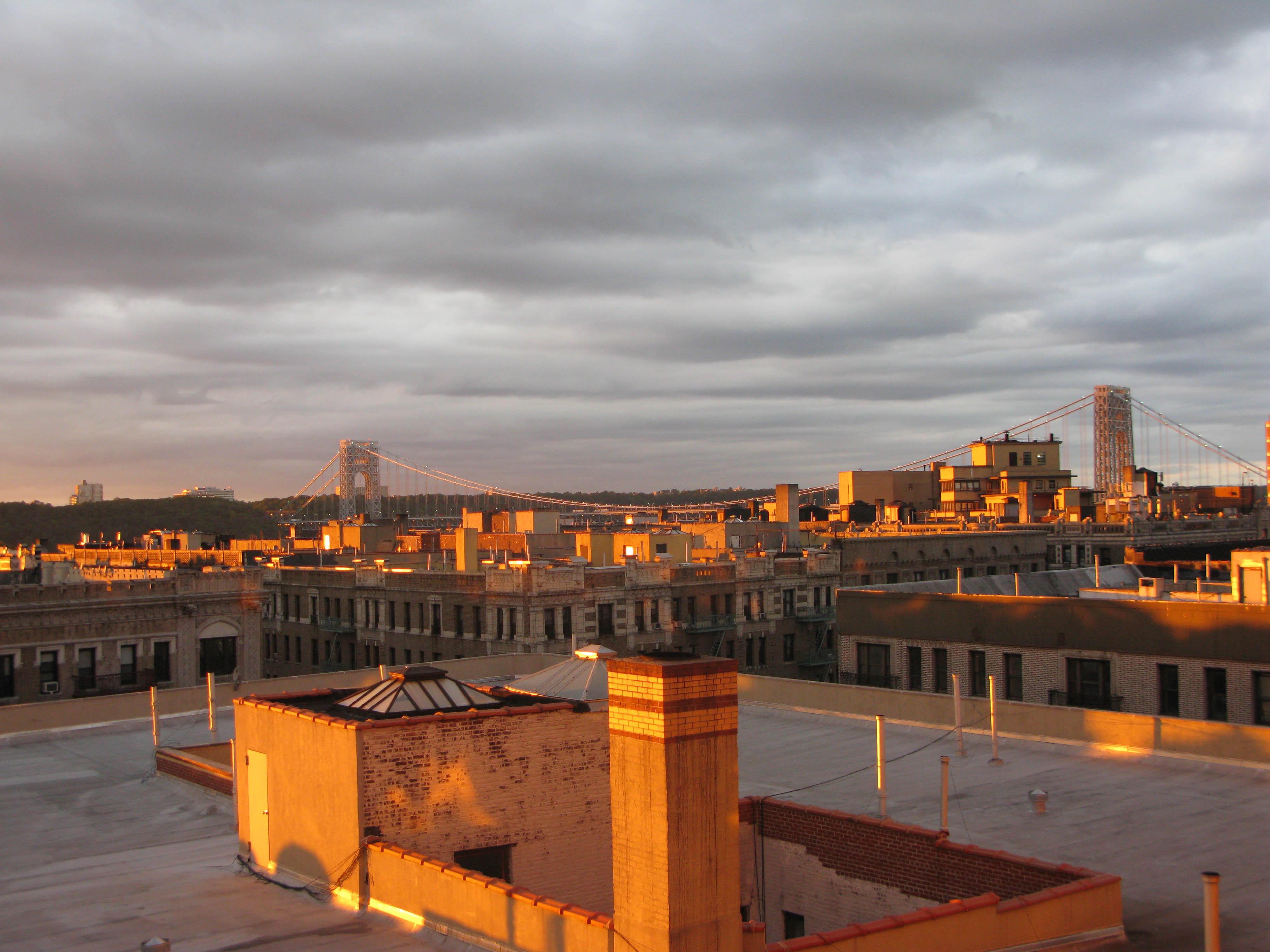
An amber light descended on the rooftops of Washington Heights.
Dark clouds loomed ominously overhead.
Inside we read the news reports and — like everyone else we know — wondered what it means.
Are we fucked?
Or are we not fucked?
Odd that nobody seems to know.
But to frame it in these terms is comforting.
It almost makes it seem as if today is no different than any other day.
As if we were the bridge, and any troubles were in fact just passing clouds in the sky.
Filed under: Architecture, Dissonance, Government, GWB Project, Longing, Obsession, Politicians | Leave a Comment
Tags: Financial Disasters, The Bailout, The George Washington Bridge, Wall Street
In which The Gay Recluse loves Neil Young.

We always remember when we were only five or six years old and one of our older brothers would play After the Gold Rush by Neil Young.
There’s almost always a raw quality to Neil Young during this era (by which we mean his heyday in the 70s) that allows him to get away with things that other people couldn’t pull off. He’s always subverting the very forms he helped to establish.
He also seemed to understand that the song — the message — was more important than any of its components, so it didn’t really matter if the band wasn’t “tight” or if he sang a few things off key; in short, he pushed the beauty of imperfection to new heights in the context of guitar rock.
We always loved “Barstool Blues,” the song from Zuma. It’s one of those Neil Young records that sounds like it took about three hours to make.
But at least half of the songs are decent, and a couple are timeless.
“Barstool Blues” doesn’t have a chorus or verse, but it’s filled with incredible images, punctuated by the distorted guitars.
We listen to it and have the sense that we are flipping channels between movies of our dreams.
And Neil Young is like: “Who cares. Let’s rock get high!”
He was really at the height of his powers then.
It’s strange to think that he was so much younger then than we are now.
We recorded our version of it anyway.
“Barstool Blues”
Download the MP3 from our new Death Culture at Sea site (this should work, but don’t kill us if it doesn’t!)
or
Filed under: Bad Rock, Death Culture at Sea, Dissonance, Good Rock, Memory, The Gay Recluse | Leave a Comment
Tags: Barstool Blues, Neil Young, Zuma
On the Heart Is a Lonely Hunter
In which The Gay Recluse loves Carson McCullers.

Not long ago we finished reading The Heart Is a Lonely Hunter, by Carson McCullers.
Published in 1940, the book — as the jacket tells us — made McCullers (only 23 at the time!) a literary star.
In the book, which is set in a small town in the south, she describes a moral isolation that — again, as the promotional language on the book makes clear — transcends stereotypical ideas of class and race.
Admirable (and true!) as that is, what impressed us even more was McCullers’ ability to the same with regard to love and sex, including the gay version of both.
At the heart of the book is a deaf and gay and mute man who is in love with another deaf and mute man who is sent away to an institution by his family. It’s heartbreaking.
Another man is in a sexless marriage that we are led to suppose was made out of convenience, given what we learn about her preference for sleeping with women.
Of course none of this is explicitly mentioned on the promotional copy on the back cover, even though it’s a relatively new printing.
While the publishers are more than happy to refer to Richard Wright, who explicitly lauded McCullers’ ability to “embrace black and white humanity in one sweep of apprehension and tenderness,” we have to read in code to understand that she does the same in terms of sexual orientation: thus we have Tennessee Williams, Gore Vidal and May Sarton discussing her beautiful prose and refined sense of truth.
Oh well. It’s still a fucking incredible book that should always be considered one of the few bright spots in the Dark Ages of American fiction.
Oh and McCullers also wrote Reflections in a Golden Eye, which was turned into a seriously underrated but seriously ass-kicking movie (directed by John Huston) in which Marlon Brando plays a homosexually repressed army officer married to an out-of-control Elizabeth Taylor. It’s even better than it sounds.
We often think of ourselves as making so much progress.
But reading Carson McCullers, we are left with the sense — both wistful and disturbing — that against all odds, things have somehow gotten worse.
Filed under: Capitalism, Communism, Conspiracy, Dissonance, Literature, The Gay Recluse, Writers-American | 2 Comments
Tags: Carson McCullers, Gay Voice, John Huston, Marlon Brando, Reflections in a Golden Eye, The Heart Is a Lonely Hunter
On Au Hasard Balthazar
In which The Gay Recluse is disturbed, but not unpleasantly so. 
A few nights ago we saw Au hasard Balthazar, the 1966 film by Robert Bresson.*

It’s about a donkey born on a farm in a small village in France, and a young girl who — at least for a little while — loves the donkey.

But the fate of the family is difficult, and eventually after time passes the donkey is callously sold.

Meanwhile, the girl falls in love with a sadistic teenager who seems to do nothing but torture others — the girl, the donkey, the town drunk — and never suffer any consequences.
In short: it’s just like real life! Lol.
Also realistic is a bleakness that pervades the film, and a plot that is rather abstruse at times, so that our reaction to the characters tends to be more emotional than plot driven.
For the most part, we ended up hating all of them, even — or especially — the girl, because she doesn’t really seem to care about the donkey, Balthazar, who — as he’s passed from owner to owner — suffers more and more.
Like the J-man, who was obvs a big influence on Bresson, Balthazar is meant to transcend the obvious flaws of his human cohorts. Still, we can’t watch Balthazar without a certain dread, because his suffering is so constant and needless.
By the time the movie ends, we are nothing but relieved to end this arduous trip.
Still, we’re glad we saw it.

Even if it makes us look even more askance than usual at our fellow subway riders, knowing that we are all lesser beings than Balthazar, a sad donkey.
*We cannot watch this movie — bleak and “outsidery” as it is — without concluding that Bresson was gay. A quick search reveals that he probably was, given the abundance of quotes such as this one, from mastersofcinema.com: “Bresson was a private and reserved person, and we shall respect his privacy by avoiding issues pertaining to his personal life.” Srsly, has anyone ever said that about anyone who wasn’t gay?
Filed under: Film, Gay | 3 Comments
Tags: Au Hasard Balthazar, Donkeys, Robert Bresson
On a Story of Floating Weeds
In which The Gay Recluse is entranced.

Tonight we watched A Story of Floating Weeds, the 1934 film by Yasujiro Ozu.

It’s a silent movie, which takes some getting used to (and we say this with regret, not about the movie, but the state of our frenzied existence).

Like the other Ozu films we’ve seen — Tokyo Story, Early Spring and a few others — we were taken with a remarkable balance between the film’s obvious composition — the underlying beauty of literally every shot — and a natural dignity possessed by the actors.
Like so much of life, there is a pervasive melancholy to these films, a sense of striving for something better and never quite attaining it.
A Story of Floating Weeds concerns the leader of a somewhat downtrodden acting troupe who returns to the small city where he had fathered a son twenty years earlier.
The son has grown up with the mother and believes that his father is dead, although the actor/father has paid for his schooling, with the hope that his son will lead a better life than he has.
We are swept away by Ozu’s understanding of both the allure and the oppression of the artistic life, the need to achieve it any cost, and the even greater need to escape it once it is within our grasp.
He is a master at conveying the strictures of society on one hand, but the inevitable loneliness and failure — not to mention the poverty — that is almost always the cost for anyone who dares to abandon it.
But again, much like life, the oppression of any environment is made bearable by a sort of calm sensuality that pervades the film, e.g., we love watching the men in the failing acting troupe as they lie around backstage, lazily making jokes or looking for cigarettes.
We also love watching the women, who are — albeit in a Japanese context — sarcastic and opinionated, but willing to fight (and fight dirty!) for love.
That Ozu was gay is almost a certainty. (He never married or had children, and was expelled from boarding school for ______.)
This cannot be surprising to anyone who watches the way his camera caresses the male bodies in his films, and observes the women with a detached empathy that (at least in our experience) is unlikely to arise in anyone interested in physical possession.
When the film started, we wondered how we could last through 90 minutes of intense silence.
When it was over, we longed for more.
Filed under: Drag Queens, Dream, Film, Gay, Language, Longing, Pleasure | 2 Comments
Tags: A Story of Floating Weeds, Gay Directors, Japan, Silent Movies, Yasujiro Ozu
In which The Gay Recluse remembers tenth grade.

Like a million other kids in 1984 we were obsessed with Murmur, by R.E.M.
Our friend Tom owned the LP and we used to go down to his room to listen to it — this was at boarding school — and then we made a tape. (That was before computers!)
The quiet, hushed lyrics really spoke to us, because we were just starting to acknowledge certain “things,” but only at night, and only in a quiet, hushed whisper.
We didn’t care what what Michael Stipe was saying, and hated everyone who made fun of him for mumbling. At least it wasn’t dumb shit about liking girls! (Not that we made that point.)
We didn’t know at the time that he would have the la$t laugh, of cour$e.
We always loved “Perfect Circle,” which was the most haunting song on the record. It was the “ballad.”
The other day it just came to us as we were getting out of the subway.
So we decided to record it.
Honestly, it’s probably not the best thing we’ve ever done, and it’s safe to say that we prefer the R.E.M. version.
But whatevs. That’s why covers are rarely easy!
Still, it was good to make the recording.
There was a time when we would have died for this song.
And in some ways, we probably did.
“Perfect Circle” by R.E.M. (Death Culture at Sea version) (Listen to the MP3)
Filed under: Bad Rock, Death Culture at Sea, Good Rock, Language, Longing, Memory, Nostalgia, Obsession, The Gay Recluse | 2 Comments
Tags: Boarding School, Michael Stipe, Murmur, Perfect Circle, R.E.M., Tenth Grade
On My Bloody Valentine
In which The Gay Recluse passes up the chance of a lifetime.

Did you hear? Tonight My Bloody Valentine is playing at Roseland.

They’ve always been one of our favorite bands.

Loveless is a masterpiece; dissonant, propulsive and melodic, it changed rock, or least provided an important delineation. The way great pieces of art will often do, it both referenced the past and predicted the future.
It’s not an album that could be made today, when rock has splintered into so many fragments and niches. (We say that without any nostalgia, however!) But it still hovers at the edge of what’s feasible in a rock album, which is why it will always have a certain timeless appeal.
All of which begs the question: why didn’t we go to the show?
They haven’t performed in over fifteen years, and we’ve never seen them; and given their tortured history since Loveless — which came out in 1991 or thereabouts — who can say with any certainty they’ll ever perform here again?
We remembered how it felt when we went to see Mission of Burma a few years ago; though it was exciting to see the band play songs that had long before been imprinted on our musical souls, there was also something depressing about being back at Irving Plaza, where we ran into many of the same people we used to see all the time in the East Village. Some of them we liked, and some we had always hated, except everyone looked older and more fatigued. A___ was completely burned out, which was sad; she kept slurring her words and looking through us. It was like a bad high-school reunion!
In many ways we were a very different person when we loved bands like Mission of Burma and My Bloody Valentine.
And while we don’t want to disown our past — to the extent that we still admire these bands and what they did for us — we don’t want to inhabit again, either.
So we came home and said hello to the cats.
And stared out the window at the glittering span of the George Washington Bridge.
Somewhere a few miles away, a few thousand people are being obliterated by a wall of tremolating sound.
We can easily imagine the music as it pulses through the streets and reverberates into the night.
Igniting memories of where we’ve been, while sustaining dreams of where we’d still like to go.
Filed under: Decay, Dissonance, Dream, Faith, Good Rock, Longing, Memory, Nostalgia | 1 Comment
Tags: Irving Plaza, Loveless, Mission of Burma, My Bloody Valentine, Reunions, Roseland
On a Remarkably Dumb Quote in The Times (Tens of Thousands of White Guys Soon To Be Executed)
In which The Gay Recluse spots a remarkably dumb quote and posts it for your entertainment.
Ok, so this is from a fairly innocuous Times story about how the post-war “white flight” trend is officially over in New York City, which is obvious enough to anyone who’s lived here for the past decade or so. But whatevs, check this out:
Andrew A. Beveridge, a demographer at Queens College, called the apparent trend a potential “harbinger of racial equilibrium.”
But he cautioned that it could be short-lived given the turmoil on Wall Street, because “a lot of the non-Hispanic whites are plainly associated with the financial community.”
Ha ha, we guess they’re planning to execute about 50,000 white guys as part of the bailout, and this is going to have a big impact on city demographics. Who says that the feds aren’t being tough? (Oh and who gets their apartments?)
Filed under: Drivel, The Gay Recluse, The Times | Leave a Comment
Tags: Bailouts, Demographics, Executions, The New York Times


 The Gay Recluse